Cold Sores: A Doctor’s Honest Guide to Relief
It is 11:30 PM, and I imagine you are sitting in front of a mirror, staring at that familiar, tingling red spot on your lip. Your heart sinks a little. I know that feeling. It’s not just about the pain; it’s the feeling that everyone is going to stare at it. It feels like a neon sign has just been switched on your face.
I want you to take a deep breath. You are not “dirty,” and you certainly aren’t alone.
I remember a patient I saw just last week—let’s call her Elena. She is a 28-year-old wedding planner, vibrant and organized. She came into my clinic in tears because she had a massive outbreak two days before her own sister’s wedding. “Dr. Saqlain,” she said, hiding her mouth behind a scarf, “I can’t be in the photos like this. Why does this always happen when I’m stressed?”
Elena’s reaction was completely normal. Cold sores have a nasty habit of showing up exactly when we don’t want them. But here is the good news: we understand this virus better than ever before. We know how to tame it, how to hide it, and how to speed up the healing. So, let’s pour a cup of tea and talk about what is happening, just friend to friend.
What Cold Sores Really Are
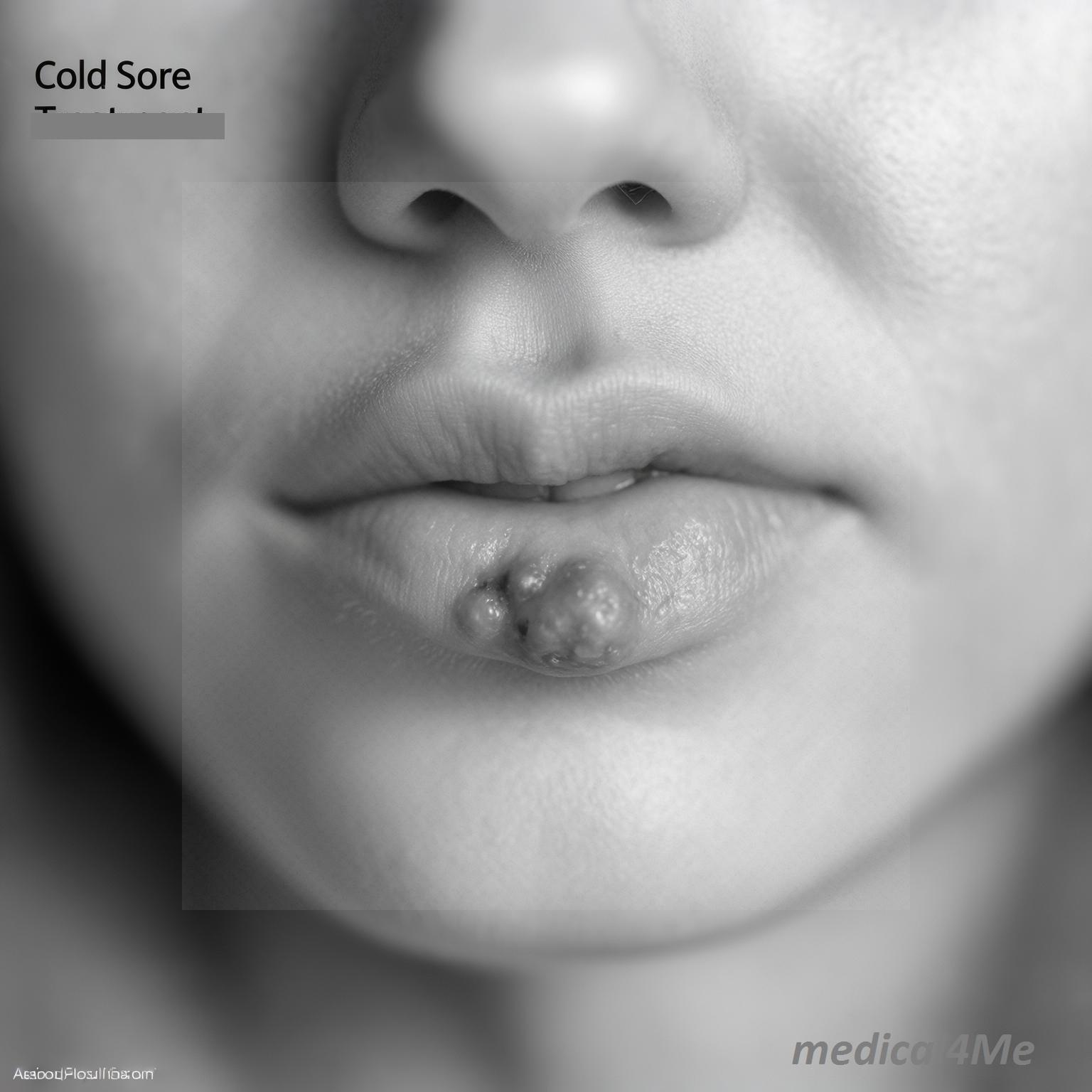
Let’s strip away the stigma. Cold sores are caused by the Herpes Simplex Virus (usually HSV-1). But don’t let the medical name scare you.
I like to use a specific analogy to explain this to my patients. Imagine the virus is like a submarine. Most of the time, it stays deep underwater (dormant in your nerve cells), completely invisible and quiet. It’s just resting there. However, when the waters get choppy—maybe you are stressed, sick, or stayed out in the sun too long—the submarine decides to surface.
When it breaks the surface of the water (your skin), that is the outbreak you see. Once the storm passes, the submarine dives back down into the deep water and goes to sleep again. It never really leaves the ocean, but it spends most of its time hiding.
To be perfectly honest, the medical community is still exploring the precise mechanism of why some people’s “submarines” surface monthly, while others carry the virus their whole lives and never see a single periscope. It is frustratingly random.
Recognizing the Symptoms
You might think the blister is the first sign, but it’s actually not. If you are tuned in to your body, you can catch it earlier.
I recently treated Mr. Arthur, a 62-year-old retired bus driver. He came in thinking he had been bitten by a spider on his lip. “It started with this burning itch,” he told me, “and then boom, this cluster appeared.” Because he missed that initial itch, we lost the window for the best treatment.
My first thought when a patient describes this is always: Did they feel the prodrome? That is the medical word for the warning sign.
Here is the typical timeline you need to watch for:
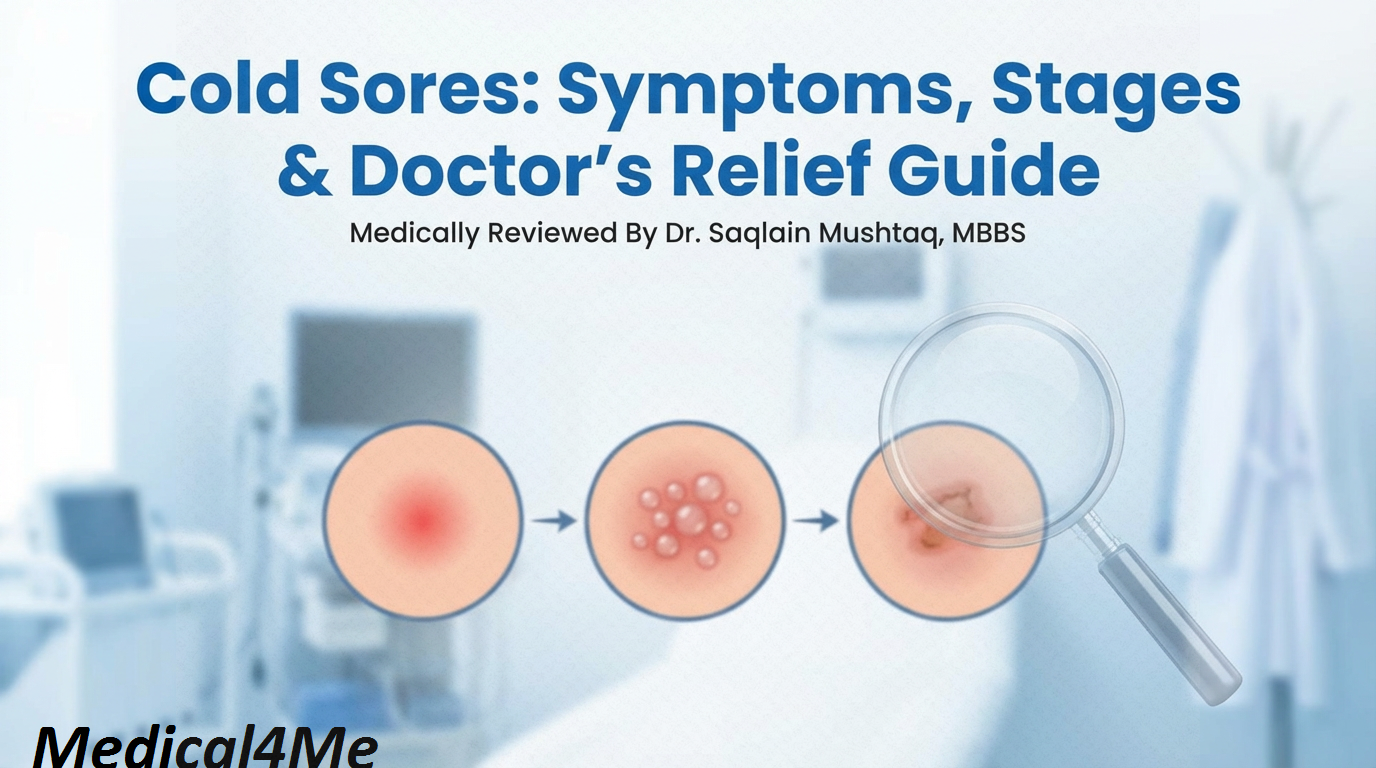
- The Prodrome (Day 1-2): This is the warning bell. You feel tingling, itching, or burning on a specific spot on the lip. There is no bump yet. This is the “Golden Window” for treatment.
- The Blister Phase (Day 2-4): A small cluster of fluid-filled blisters appears. The area becomes red and painful.
- The Weeping Phase (Day 4-5): The blisters burst. This is often the most painful part, and you might see an open sore.
- The Crusting Phase (Day 5-8): A yellow or brownish crust forms. It feels tight and might crack if you smile too wide.
- The Healing Phase (Day 8-10): The scab falls off, usually leaving pink skin that fades.
Root Causes
So, why did the submarine surface today? It is usually because your immune system was momentarily distracted.
The virus is incredibly common. WHO data shows that billions of people under the age of 50 have HSV-1 infection globally. You likely caught it when you were a child, perhaps from a sweet kiss from a grandmother or sharing a spoon.
Common triggers that wake the virus up include:
- Stress and Fatigue: Just like with Elena, stress weakens your defenses.
- Sunlight (UV Rays): This is a huge trigger for many.
- Illness: A cold or flu keeps your immune system busy elsewhere.
- Hormonal Changes: Periods or pregnancy can trigger an outbreak.
The Diagnostic Journey
Diagnosing cold sores is usually straightforward. I rarely need fancy machines; I just need to listen and look.
Here is what usually happens when you visit us here at Medical4Me:
- The Visual Inspection: I look for the classic cluster of small blisters on a red base. It is very distinct from a pimple or a canker sore (which is inside the mouth).
- The History: I will ask, “Have you had this before?” Recurrence in the exact same spot is a hallmark of cold sores.
- The Swab (Rare): Only if the case is severe or confusing, I might take a fluid sample to confirm the virus type, but this is uncommon for typical cases.
I remember Priya, a 41-year-old yoga instructor. She was worried it was an allergic reaction to a new lip balm. However, because the sensation started with a tingle before the balm was even applied, and the blisters were clustered, the diagnosis was clear. We skipped the tests and went straight to solutions.
Treatment Reality
We can’t cure the virus (kill the submarine), but we can force it to dive back down faster. Speed is everything here.
Lifestyle and Home Remedies
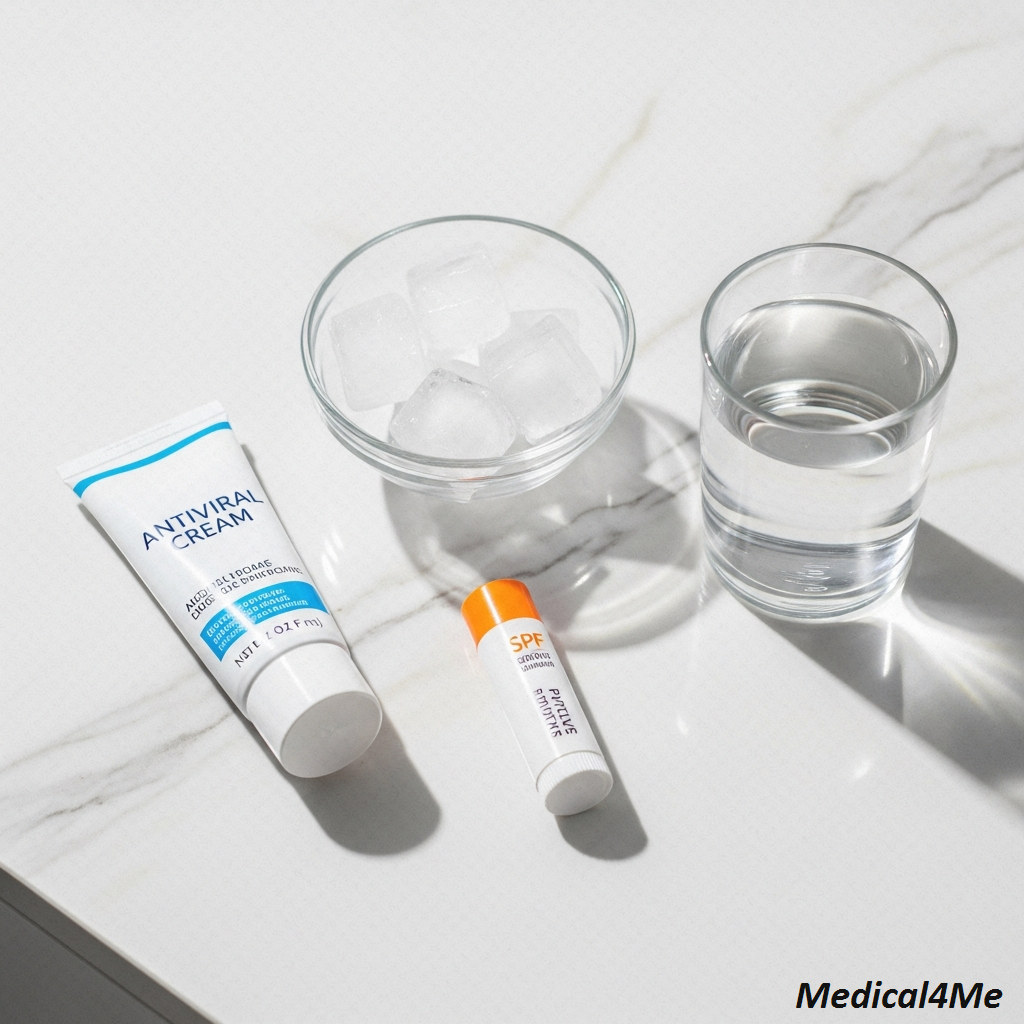
- Ice it immediately: At that very first tingle, hold an ice cube on the spot. It reduces inflammation and makes the environment inhospitable for the virus.
- Sunscreen: Use a lip balm with SPF 30 daily. It is the best prevention.
- Don’t touch it: Keep your fingers away to prevent spreading bacteria to the open sore.
Medical Options
If you catch it early, medications can work wonders. I frequently prescribe Valacyclovir (Valtrex) or Acyclovir (Zovirax).
- Valacyclovir: This is an oral antiviral pill. Mechanism: It blocks the enzyme the virus needs to replicate its DNA. Effectively, it stops the virus from making copies of itself. Side Effects: It is generally well-tolerated, but can cause headache, nausea, or dizziness in some people.
- Acyclovir Cream: A topical option. Mechanism: Similar to the pill but applied directly to the skin. Side Effects: Mild stinging or drying of the skin.
Comparing Your Options
| Treatment Type | Pros | Cons |
|---|---|---|
| Antiviral Pills (Valacyclovir) | Most effective; can stop an outbreak in its tracks if taken early. | Requires a prescription; systemic side effects possible (rare). |
| Antiviral Creams (Acyclovir) | Available over-the-counter; applied directly to the spot. | Less effective than pills; must be applied 5 times a day. |
| Patches (Hydrocolloid) | Hides the sore; prevents touching and spreading. | Doesn’t actively fight the virus; mostly for containment/comfort. |
Red Flags
Most cold sores heal on their own in two weeks. However, there are times when you must see a doctor immediately. Mayo Clinic explains that complications can occur, especially if the virus spreads to other parts of the body.
Call me if:
- The Eye is Involved: If you feel pain in your eye or see blisters near it. This is an emergency called Herpetic Keratitis and can damage vision.
- Eczema Flare-up: If you have eczema and get the virus, it can spread rapidly across the skin (Eczema Herpeticum).
- Weakened Immune System: If you are on chemotherapy or have HIV, the outbreak can be severe.
Frequently Asked Questions My Patients Ask
Yes, highly. You are contagious from the first tingle until the scab has completely fallen off and healed.
Please don’t. Avoid kissing or sharing utensils, straws, or lip balm until you are fully healed.
Not really. While some people swear by it to dry out the sore, it can actually irritate the skin more. I mentioned in recent posts that dedicated antiviral creams are far superior.
Yes. CDC guidelines state that oral sex can transmit HSV-1 from the mouth to the genitals.
It is a good idea. The virus can linger on the bristles. Replace your toothbrush once the blister forms and again after it heals.
Your partner might carry the virus but be asymptomatic. Some immune systems just keep the “submarine” submerged better than others.
My Final Professional Advice
I know cold sores feel like a betrayal by your own body. I know they can ruin confidence. But remember, having this virus makes you essentially… human. Most of the adult population is right there with you.
If you feel that familiar tingle tonight, grab some ice and call your doctor for a prescription of Valacyclovir if you can. Just like with other conditions we manage, being proactive is your superpower.
Be kind to yourself. Stress feeds the virus, so your best defense is actually to relax, rest, and know that this, too, will clear up in a few days. You are doing just fine.

Medically Reviewed By
Dr. Saqlain Mushtaq, MBBSLead Medical Author, Medical4Me.comAbout Our Editorial Process
💬 Share Your Experience
Share your thoughts, questions, or personal tips below. Our community and editorial team value respectful and insightful discussions.