
Depression in Humans: Understanding the Invisible Weight
I remember talking to a patient named Zain last week. He sat in my office, shoulders slumped, looking at his hands like they didn’t belong to him. “It’s not that I’m sad, Doc,” he told me, his voice barely a whisper. “It’s just that… nothing tastes like anything anymore. The colors are gone.”
That right there? That is the perfect description of what depression in humans actually feels like. It isn’t just a bad day, and it certainly isn’t a sign of weakness. It’s a thief that steals your vitality, your joy, and sometimes, your hope. But here is the thing I tell every single person who walks through my door: You do not have to carry this weight forever.
I’ve seen countless people—mothers, students, CEOs—walk through the darkest tunnels and come out the other side. You know, we often think we are the only ones suffering, but the numbers tell a different story. The World Health Organization reports that hundreds of millions of people are fighting this exact battle right now.
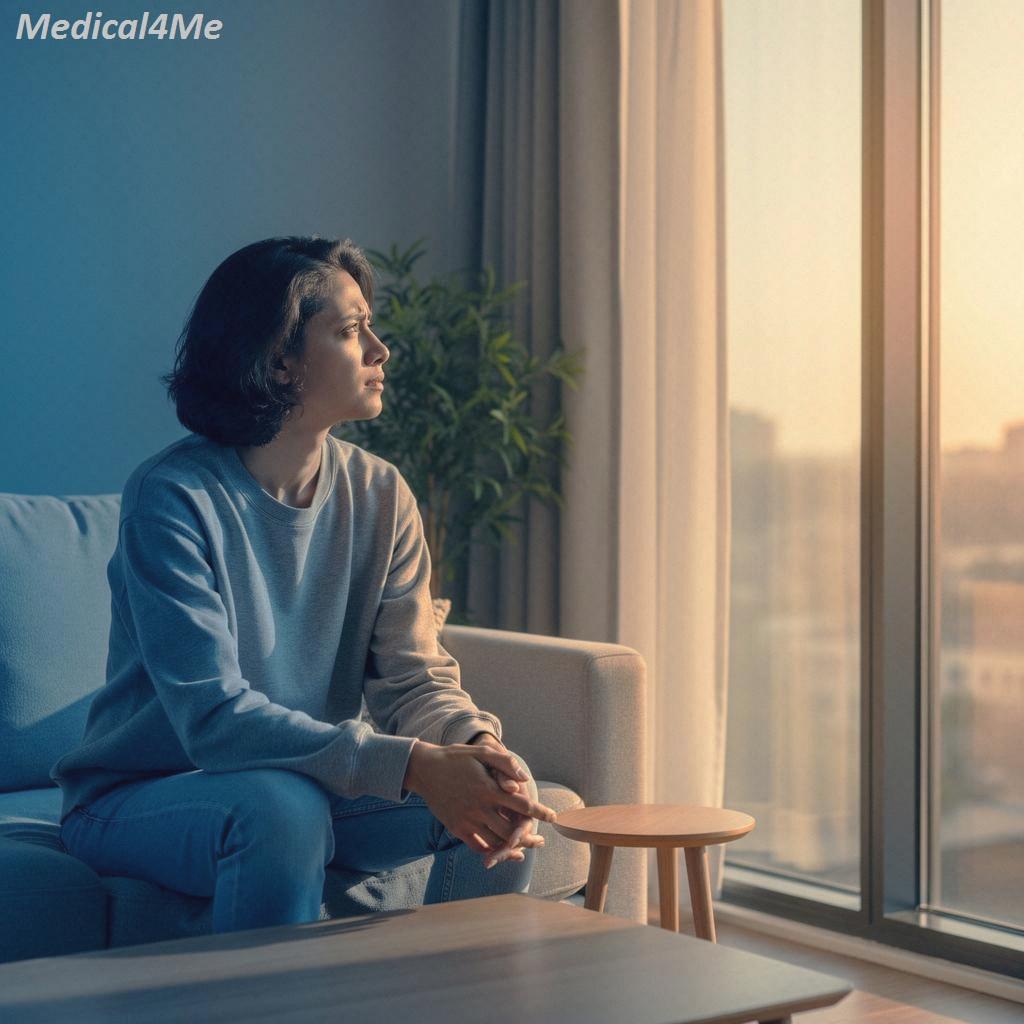
What Actually Is Depression?
If we are being honest, the word “depression” gets thrown around too loosely these days. People say, “I’m depressed my team lost the game.” But clinical depression? That is a different beast entirely. When we talk about depression in humans, we are discussing a complex interplay of biology, psychology, and environment.
The “Heavy Blanket” Analogy
Imagine wearing a lead blanket—the kind they use at the dentist for X-rays. Now imagine wearing it 24/7. You have to shower with it, work with it, and try to smile at your family with it on. That physical and emotional heaviness is what distinguishes clinical depression from ordinary sadness.
It’s essentially a mood disorder that causes a persistent feeling of sadness and loss of interest. But scientifically? It’s often a dysregulation of neurotransmitters—chemicals like serotonin and dopamine that help regulate how we feel. When these get out of whack, the world starts to look grey.
Think of it like a car engine. Sometimes, the spark plugs just aren’t firing right. It doesn’t mean the car is junk; it just means it needs a mechanic to pop the hood and take a look. As I’ve discussed in other articles on mental health, the brain is an organ, and like any organ, it can get sick.
Recognizing Symptoms and Signs
You might be wondering, “Do I have this, or am I just tired?” Well, symptoms can be tricky because they show up differently for everyone. My friend Mahnoor, for instance, didn’t cry at all. She just got incredibly irritable and stopped answering her phone.
We typically look for a cluster of symptoms that last for more than two weeks. I like to categorize them using a “traffic light” system to help patients gauge severity:
- 🟢 Mild (The Warning Light): You feel “off.” Maybe you’re sleeping a bit more than usual, or you’re just not excited about your hobbies. You can still function, but it takes more effort.
- 🟡 Moderate (The Caution Zone): This is where things get harder. You might start missing deadlines at work. Socializing feels like a chore. You might experience physical symptoms like unexplained aches or digestive issues, which Mayo Clinic experts often highlight as overlooked signs.
- 🔴 Severe (The Red Flag): This is critical. You might feel totally numb. Getting out of bed feels impossible. Dark thoughts about death or “not being here” might creep in.
But look, it’s not just about mood. Depression in humans manifests physically too. I’ve had patients come in for back pain or chronic headaches, only to realize the root cause was untreated depression.
Understanding Causes and Risk Factors
Why does this happen? That’s the million-dollar question. And honestly, there isn’t just one answer. It’s usually a “perfect storm” of factors colliding at once.
- Biochemistry: Differences in certain chemicals in the brain may contribute to symptoms. It’s not your fault; it’s chemistry.
- Genetics: Depression can run in families. If your parent or sibling has it, your risk is higher. It’s like inheriting a tendency for high blood pressure.
- Personality: People who are easily overwhelmed or naturally pessimistic might be more prone.
- Environmental Factors: Continuous exposure to violence, neglect, abuse or poverty may make some people more vulnerable to depression.
And let’s not forget major life changes. Moving to a new country, like many of the folks I know who moved from Pakistan to the US, can trigger it. The isolation, the culture shock—it all adds up. The CDC notes that trauma and stress are massive triggers.
The Diagnostic Journey
I know the idea of seeing a doctor for your feelings can be terrifying. I really do understand. You might worry about being judged or labeled. But let me walk you through what actually happens, so it feels less scary.
First off, there is no blood test for depression in humans. We can’t just stick a thermometer in your mouth and say, “Yep, you’re depressed.” Instead, it’s a conversation. We’ll sit down, maybe grab a coffee (well, I’ll have coffee), and just talk.
What to Expect in the Exam Room
Your doctor will likely use a questionnaire called the PHQ-9. It asks simple questions like, “Over the last 2 weeks, how often have you been bothered by having little interest or pleasure in doing things?” It’s not a test you pass or fail. It’s just a map to help us see where you are.
We will also want to rule out other stuff. Sometimes, a thyroid issue or a vitamin D deficiency can mimic depression. So, we might do some basic blood work just to be sure your physical engine is running smooth.
Treatment Options Comparison
Here is the good news: this is treatable. Highly treatable. We have come such a long way from the days of just telling people to “cheer up.” Today, we have a toolkit full of effective options.
| Treatment Type | Best For | What to Expect |
|---|---|---|
| Psychotherapy (CBT) | Mild to Moderate Depression | Talking through patterns. It helps you rewire negative thought loops. It’s work, but it lasts. |
| Medication (SSRIs/SNRIs) | Moderate to Severe Cases | Daily pills that balance chemicals. They take 4-6 weeks to kick in properly. |
| Lifestyle Medicine | All Stages (Adjunct) | Exercise, diet, and sleep hygiene. These are the foundations of recovery. |
| Brain Stimulation | Treatment-Resistant Cases | Techniques like TMS or ECT for when meds don’t work. It’s advanced stuff, but effective. |
Usually, the “gold standard” is a combination. Meds can lift the fog enough for you to actually do the work in therapy. It’s not an either/or situation.

Prevention Strategies
Can you prevent it? Well, you can certainly build a stronger defense system. Think of it like building a levee before the floodwaters rise.
I always tell my patients to focus on the “Big Three”: Sleep, Movement, and Connection. If you are sleeping 4 hours a night, your emotional regulation is going to be shot. You need 7-9 hours, non-negotiable.
And connection? It’s vital. We are social creatures. Even if you don’t feel like it, try to see one friend a week. Just coffee. No pressure. Isolation feeds depression in humans like gasoline on a fire.
When to Seek Medical Help
This is the most important part of this article. Please read this carefully.
⚠️ Immediate Action Required
If you or someone you know is feeling unsafe, or thinking about hurting themselves, this is not the time to wait. Call 988 (in the US) or go to the nearest emergency room immediately. Depression lies to you; it tells you things won’t get better. That is a lie. Help is available 24/7.
Even if it’s not an emergency, if you’ve felt “down” for more than two weeks and it’s messing with your work or relationships, make that appointment. You wouldn’t walk around on a broken leg for two weeks, right?
Light at the End of the Tunnel
Let me tell you about Rasheed. He was a software engineer, brilliant guy, He stopped playing his guitar, which he used to love. He told me he felt like he was watching his life through a dirty window.
We started him on a low-dose SSRI and got him into cognitive behavioral therapy. The first month was rough; he didn’t feel much change. But around week six, he came in and said, “Doc, I heard a bird singing this morning and it actually sounded nice.” That was the turning point. Today, Rasheed is back to jamming on weekends. He still has bad days, but the fog has lifted.
Latest Research & Developments
The field is moving fast. In 2023 and 2024, we’ve seen incredible research coming out of places like Johns Hopkins regarding the gut-brain axis. Turns out, your stomach health has a massive impact on your mood. Inflammation is another hot topic—treating bodily inflammation might actually help treat depression in humans.
There is also promising work being done with ketamine therapy for treatment-resistant depression. It’s acting faster than traditional meds, giving hope to people who felt they had run out of options.
Frequently Asked Questions
Not necessarily. Many people use medication as a bridge—a tool to help them get through a rough patch (6-12 months). Once you’ve learned coping skills and life has stabilized, many patients successfully taper off under doctor supervision. It’s not a life sentence.
It’s more than just chemicals. While serotonin plays a role, current research suggests it’s also about nerve cell connections, nerve growth, and the functioning of nerve circuits. It’s structural, biological, and environmental all at once.
For mild cases, lifestyle changes like exercise, diet, and stress management can sometimes be enough. However, for moderate to severe depression in humans, these are usually most effective when combined with professional treatment like therapy or medication.
Listen without fixing. You don’t need to offer solutions; just offer presence. Say things like, “I’m here for you,” or “I can’t imagine how hard this is, but I’m not going anywhere.” Encourage them gently to seek professional help.
Absolutely. It increases the risk of heart disease, diabetes, and stroke. It can weaken the immune system and increase pain sensitivity. Treating your mind is literally treating your body.
Finding Your Way Back
If you take nothing else from this, please take this: Your current feelings are not your permanent reality. The nature of depression in humans is that it tries to convince you that the darkness is all there is. But I have seen the light return to too many eyes to believe that.
Start small. Make the call. Talk to a friend. Step outside for five minutes. You are worthy of recovery, and you are worthy of a life that feels full and colorful again. We are rooting for you here at Medical4Me.
This content is for informational purposes only and is not a substitute for professional medical advice, diagnosis, or treatment. Always seek the advice of your physician or other qualified health provider with any questions you may have regarding a medical condition. Never disregard professional medical advice or delay in seeking it because of something you have read on Medical4Me.com.
💬 Share Your Experience
Share your thoughts, questions, or personal tips below. Our community and editorial team value respectful and insightful discussions.