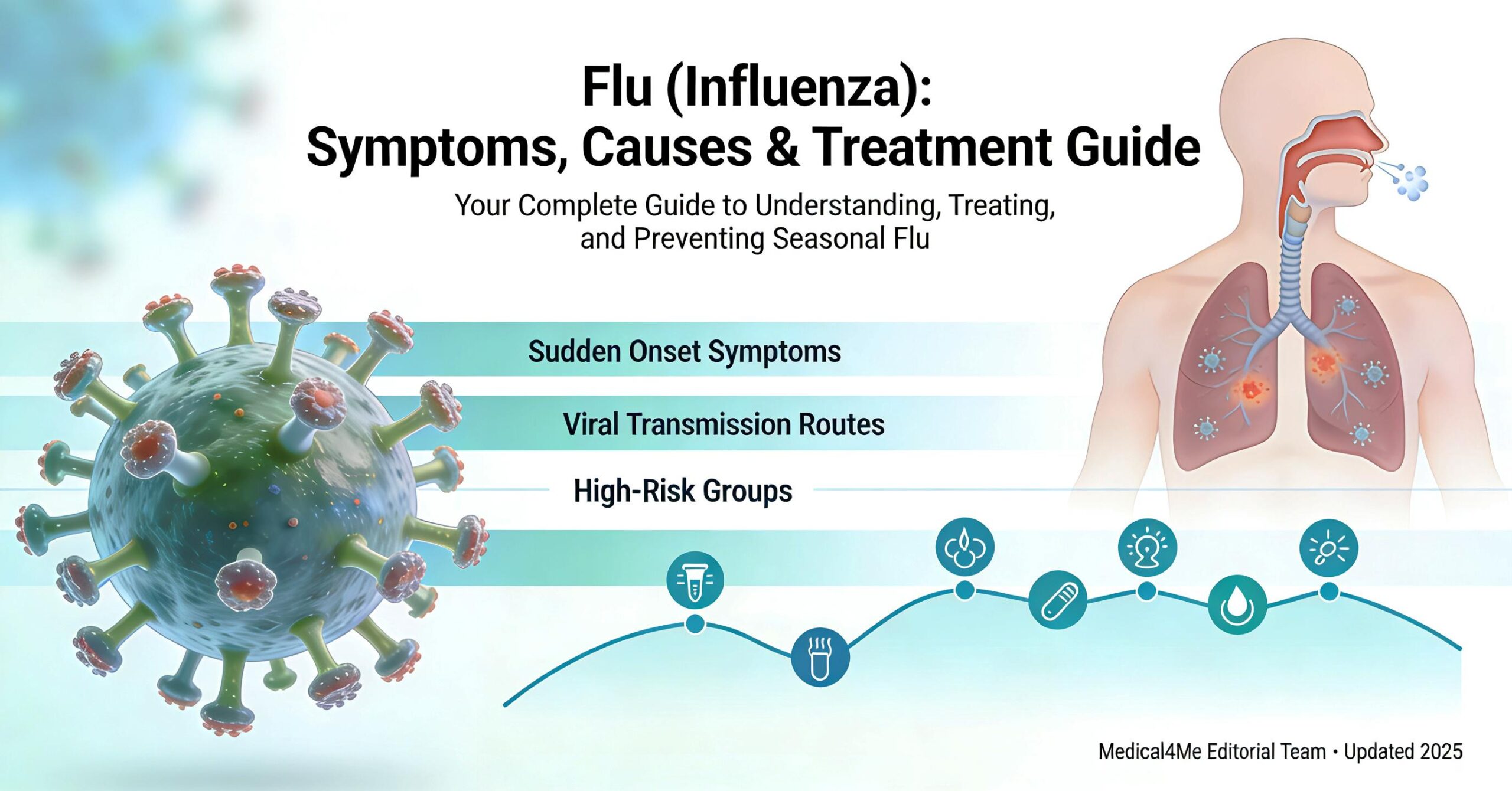
Flu (Influenza): Symptoms, Causes & Treatment Guide
Have you ever watched a simple cough turn into a fever that knocks someone flat in less than a day and thought, you know, “How did that get so bad so fast?” According to recent CDC guidelines state that seasonal flu infects millions of people every year, and a significant number end up needing hospital care. So if you’re worried about Flu (Influenza), you’re honestly not overreacting.
Maybe you’re reading this with a heavy head, hot skin, and that strange mix of shivers and sweat. Maybe it’s your child, a parent, or a partner who looks exhausted and won’t really tell you how bad they feel. I understand this can be scary. Many people feel overwhelmed trying to decide whether they can stay home or if they should call a doctor right away.
In my clinical experience, once people understand what’s happening inside their body, the fear starts to loosen its grip. So my goal here is simple: to walk you through what Flu (Influenza) really is, the signs to watch for, how we diagnose it, and what therapies actually help, in plain language that feels like a conversation, not a lecture.

What is Flu (Influenza)?
Imagine your breathing system as a busy train network. Your nose, throat, and lungs are the tracks, and tiny trains carry oxygen in and waste gases out all day long. The influenza virus is like a group of hackers that sneak onto the tracks, hijack the trains, and force them to copy more and more hackers instead of doing their usual job.
Medically, Flu (Influenza) is an acute viral infection mainly caused by influenza A and B viruses. It targets the respiratory tract and can spread very quickly from person to person. According to WHO data shows, seasonal influenza leads to millions of cases of severe illness worldwide each year. That sounds intense, but it also means doctors know this infection very well.
Here’s the thing: flu is not just “a strong cold.” A cold usually creeps up slowly, with a runny nose, maybe a sore throat, and mild tiredness. Seasonal flu often slams into you. One morning you might feel a bit off, and by evening you’re shivering, burning up, and every muscle in your body hurts.
From a doctor’s point of view, influenza virus infection is a short, sharp assault on your system. The virus slips into the cells that line your nose, throat, and lungs, then uses them to make more virus. Your immune system sees the invasion and reacts with inflammation, fever, and mucus. That reaction is what makes you feel so miserable.
According to Mayo Clinic explains, healthy adults usually bounce back within a week or two, but in some people the same infection can trigger serious complications like pneumonia. So understanding your own risk, and your early indicators, matters a lot.
Recognizing Symptoms and Signs of Flu (Influenza)
Now, let’s talk about the part that keeps people awake at night: “What signs should I actually watch for?” When someone describes feeling as if they were hit by a truck overnight, my first thought is almost always flu virus illness.
Typical indicators of Flu (Influenza) include:
- sudden fever (often above 38°C / 100.4°F)
- chills or shivering
- headache that makes it hard to focus
- deep muscle and joint pain
- dry, hacking cough
- sore or scratchy throat
- stuffy or runny nose
- extreme tiredness, even after light activity
- loss of appetite
To make it easier, think of symptom bands:
- 🟢 Mild: runny nose, light sore throat, mild cough, low-grade fever, you can still move around
- 🟡 Moderate: higher fever, body aches, deep fatigue, dry cough, you’d rather stay in bed than do anything else
- 🔴 Severe: breathing feels hard, chest hurts when you breathe, confusion, or you’re too weak to walk safely
In my clinical experience, the suddenness is a big clue. If a patient like Adeel, a 32-year-old software engineer, tells me, “I was working yesterday evening and by midnight I felt like my body didn’t belong to me anymore,” I strongly suspect influenza disease rather than a simple cold.
One recent CDC summary suggested that high fever and intense body aches are more common in Flu (Influenza) than in many other respiratory infections. And when several people in the same family or workplace suddenly develop similar indicators within a few days, that pattern adds another layer of suspicion.
So, if you’re sitting there wondering whether your signs fit, ask yourself: Did this hit fast, does your whole body hurt, and are you more tired than makes sense for a normal day? If yes, flu climbs pretty high on the list.
Understanding Causes and Risk Factors for Flu (Influenza)
Now, how does this virus actually reach you in the first place? The truth is, influenza is annoyingly good at spreading.
When someone with Flu (Influenza) coughs, sneezes, or even talks, tiny droplets with virus particles leave their mouth and nose. If you’re close enough to inhale them, or they land on surfaces you later touch and then bring your hand to your face, the virus gets its chance.
According to recent estimates shared by global health agencies, one person with seasonal flu can infect one to two other people on average. That doesn’t sound huge, but in crowded indoor settings it adds up quickly.
Some key causes and risk factors, step by step:
- Direct contact with infected droplets
Being within a short distance of someone who is coughing or sneezing is the classic route. Even a quick conversation can be enough in the right conditions. - Touching contaminated surfaces
Door handles, phones, keyboards, and shared items can carry the flu virus for several hours. If you rub your eyes or nose afterward, the virus has a doorway. - Weakened immune defenses
Lack of sleep, high stress, poor nutrition, or certain medicines can make your immune response slower, so the virus has an easier time. - Higher-risk bodies
Older adults, young children, pregnant people, and those living with chronic heart, lung, or metabolic disease have a higher chance of complications once infected. Some studies suggest hospitalization rates can be several times higher in these groups. - Underlying respiratory conditions
Asthma, COPD, or other lung problems mean there’s already less breathing reserve. An influenza infection then becomes a much bigger stress.
Like with other conditions, risk is rarely about a single thing. It’s the mix of exposure, your current health, and how strong this year’s influenza strain happens to be. I’ve seen patients who usually “never get sick” suddenly laid up for days, and others with weaker health who, with early therapy and good support, moved through Flu (Influenza) more smoothly than they expected.
Here’s something interesting: people are often contagious about a day before symptoms start and for up to a week after. That means you can feel fine, go to work, and still pass the virus along without realizing it. That’s one reason seasonal flu keeps coming back every year.
The Diagnostic Journey for Flu (Influenza)
Now, let’s say you come in to see a doctor because your body hurts, your temperature is up, and you just have that sense that something isn’t right. What actually happens next?
In my clinical experience, diagnosis is less about one magical test and more about a clear, stepwise story.
- Listening to your story
First, I’ll ask when the symptoms started, how fast they escalated, what the highest measured fever has been, and whether you’ve been around anyone sick. If you say, “It hit me overnight and three coworkers are out with similar signs,” flu virus illness jumps high on my list. - Checking vital signs
We look at temperature, heart rate, breathing rate, and oxygen level. Rapid breathing or low oxygen can signal that the infection is stressing your lungs. - Physical examination
I’ll listen to your lungs, check your throat, look at your ears, and gently press on your sinuses or chest if needed. The goal is to see whether this seems like an uncomplicated Flu (Influenza) case or if there might already be complications such as pneumonia. - Rapid tests when helpful
Many clinics use rapid influenza diagnostic tests, which usually involve a swab inside the nose or back of the throat. Results can come back in 15–30 minutes. They’re not perfect, but they can support the diagnosis, especially early on. - More sensitive tests in some settings
In hospitals or higher-risk situations, we sometimes use PCR tests, which detect viral genetic material. They’re more accurate but take longer and cost more. - Looking for complications
If you’re older, have chronic disease, or show worrisome indicators like chest pain or very fast breathing, we might order a chest X-ray or blood work. That helps us rule out bacterial pneumonia or other serious problems.
Let me share what typically happens from a patient’s perspective. Someone like Maha, a 27-year-old teacher, might arrive exhausted, wrapped in a blanket, eyes half-shut. She might say, “I don’t know if I’m overreacting, but this feels different.” As a physician, I’m already noting her breathing, how often she coughs, and how she moves while she talks.
By the end of that visit, we usually have a working diagnosis of Flu (Influenza) or another respiratory infection, a sense of how high the risk of complications is, and a plan for care. That plan might be home care with close monitoring or more intensive medical support.
Treatment Options for Flu (Influenza)
So, once you know this really is Flu (Influenza), what then? This is often where fear mixes with frustration. People want to feel better fast, and I get that. But flu therapy is less about a miracle drug and more about smart, steady support, sometimes combined with targeted antivirals.
Supportive Care and Home Management
First, the basics that sound almost too simple, but they work.
- Rest: Your body is throwing energy at the influenza infection. Pushing through work or workouts usually makes everything drag on longer.
- Fluids: Water, broths, herbal teas, and oral rehydration drinks help thin mucus and prevent dehydration. Dark urine or feeling dizzy when you stand up are warning signs you’re not drinking enough.
- Light food: Small, easy-to-digest meals are usually better tolerated. You don’t have to force full meals if your appetite is low.
- Fever relief: Medicines such as paracetamol (acetaminophen) or ibuprofen can ease fever and body pain. Used correctly, they can make those intense days more bearable.
Look, managing flu at home isn’t about being tough. It’s about giving your immune system the best possible conditions to do its job: rest, fluids, gentle nutrition, and paying attention to any change in your breathing or alertness.
Antiviral Medicines for Flu (Influenza)
Beyond supportive care, we sometimes use antiviral drugs that directly target the influenza virus. According to recent reviews, starting these medicines within 48 hours of symptom onset offers the most benefit.
- Oseltamivir (often known by a brand name)
This oral medicine blocks an enzyme called neuraminidase on the virus surface. By doing that, it slows the release of new virus particles from infected cells. Studies over the past few years suggest it can shorten symptom duration by about one to two days and may reduce complications in higher-risk groups. Common side effects include nausea, vomiting, and sometimes headache. - Zanamivir
This antiviral is inhaled as a powder. It also targets neuraminidase and is used mainly in certain patient groups. It can cause cough or throat irritation and isn’t ideal for people who already have severe asthma or other breathing problems. - Baloxavir marboxil
This newer medicine works differently. It blocks a viral enzyme needed to copy influenza genetic material. The appeal is that it’s given as a single oral dose. Some recent studies show similar or slightly faster symptom relief compared with oseltamivir in otherwise healthy people. Side effects can include diarrhea and mild respiratory discomfort.
According to updated summaries from major health organizations, antivirals are especially helpful for people at higher risk of complications: older adults, those with chronic heart or lung disease, those with weakened immune systems, and pregnant individuals. They’re also considered for people with very severe or rapidly worsening signs.
| Treatment approach | Pros | Cons |
|---|---|---|
| Supportive care only | Simple, low cost, fewer drug side effects, often enough for healthy adults with mild to moderate seasonal flu | Illness may last longer, slightly higher risk of complications in higher-risk groups, depends solely on your immune response |
| Supportive care + antiviral medicine | Can shorten illness by about 1–2 days, may lower risk of serious complications, gives extra help in high-risk patients | Needs early start, possible side effects (nausea, cough, diarrhea), higher cost, not essential for every healthy adult |
According to recent data summaries, about one in three high-risk patients who get antivirals early may avoid a hospital visit they might otherwise have needed. Not perfect, but meaningful.
Now, I also get a lot of questions about antibiotics. Antibiotics target bacteria, not viruses, so they don’t treat Flu (Influenza) itself. They’re only used if a bacterial complication such as pneumonia develops, and that decision should be made by a medical professional after proper evaluation.

Prevention Strategies for Flu (Influenza)
Honestly, preventing influenza infection whenever possible is kinder to your body than any medicine. And even if prevention isn’t perfect, lowering your risk makes a real difference.
According to recent public health reports, yearly flu vaccines reduce the risk of medically attended seasonal flu by about 40–60% in many years, depending on how well the vaccine matches circulating strains.
Think of prevention in simple time frames:
- Daily
- wash hands with soap and water for at least 20 seconds, especially after being around sick people
- avoid touching your eyes, nose, and mouth when you’re in shared spaces
- improve sleep quality so your immune system can recharge
- keep hydrated and aim for a balanced diet with enough fruits and vegetables
- Weekly
- wipe down high-touch surfaces like phones, keyboards, and door handles
- check in with yourself: are you more tired or run-down than usual?
- plan quiet time if your schedule has been hectic; stress really does chip away at defenses
- Yearly
- get the seasonal flu vaccine if it’s recommended for you
- review your risk factors with your doctor, especially if you have chronic conditions
- make a practical plan for what you’ll do if someone in your home comes down with Flu (Influenza)
I mentioned in recent posts that prevention is never just one action. It’s the layering of behaviors. Each piece adds a little protection, and together they make it harder for the flu virus to find an easy way in.
According to several reviews from 2023 and 2025, consistent hand hygiene alone can reduce respiratory infection rates by around 20%. Combine that with vaccination, better sleep, and staying home when you’re sick, and the chance of spreading seasonal flu drops even more.
When to Seek Medical Help for Flu (Influenza)
Red Flag Signs You Shouldn’t Ignore
Now, this is the part that often makes people anxious, and I understand why. Nobody wants to overreact, but nobody wants to wait too long either. So let’s be clear about when Flu (Influenza) stops being something you can safely ride out at home.
- breathing feels difficult, fast, or painful
- chest pain or pressure, especially when you breathe deeply or cough
- bluish or gray lips or face tone
- sudden confusion, difficulty waking up, or acting very unlike your usual self
- fever that stays high or returns after going down
- severe or persistent vomiting, or you can’t keep fluids down
- signs of dehydration: barely passing urine, very dry mouth, dizziness when standing
- in children: fast breathing, not responding normally, or refusing to drink at all
People with chronic heart, lung, kidney, or metabolic disease, or those with weakened immune systems, should reach out for medical care earlier in the course of Flu (Influenza), even if their signs seem moderate. The same goes for pregnancy.
In my clinical experience, I’d much rather reassure someone who came in early than see them wait until breathing is a struggle. If you’re on the fence, a phone call to your doctor or local health care line can help sort it out.
A Night That Finally Made Sense
Let me tell you about Sara, a 35-year-old data analyst who originally grew up in a very close-knit family. She called me late one evening, whispering, “I’ve had fevers for two days, my whole body hurts, and I’m scared to fall asleep.” She’d been trying to power through work, taking a bit of medicine here and there, but her cough was getting deeper and her energy was gone.
We talked through her indicators: sudden high fever, intense body aches, dry cough, and exposure to several sick coworkers. The pattern fit Flu (Influenza). We checked her oxygen levels, which were still okay, and started antiviral therapy because of some added risk factors. I made a clear home plan with her: specific doses and times for medicines, exactly when to call back, and which red flags meant she shouldn’t wait. Two days later, she messaged, “I’m still tired, but I don’t feel like I’m drowning in it anymore.” That kind of shift—fear to understanding, then to slow recovery—is what I hope for with every patient.
Latest Research & Developments in Flu (Influenza)
Here’s something interesting from the last couple of years. Recent reviews and trials from 2023–2025 have been looking at two big questions: how to improve vaccines so they cover more influenza strains, and how to refine antiviral medicines so they work better and faster.
Several large studies funded by national health institutes have tested updated seasonal flu vaccines against emerging strains. Early data suggest that some newer formulations may offer broader protection, especially in older adults whose immune systems don’t always respond as strongly. While numbers vary by season, some reports suggest improved effectiveness compared with older vaccine versions.
On the antiviral side, comparative studies between oseltamivir and baloxavir in otherwise healthy adults with Flu (Influenza) showed similar overall recovery times, with baloxavir often providing quicker reduction in viral load. That could matter for reducing how long people remain contagious, although researchers are still analyzing how that plays out in real-world communities.
Another area of research has focused on identifying which patients are most likely to develop complications like pneumonia or heart strain. According to several observational studies, older adults with a combination of chronic heart disease and Flu (Influenza) have significantly higher short-term cardiovascular risk. That’s one reason medical professionals now pay closer attention to heart symptoms during and after flu episodes.
To be honest, the medical community is still working out exactly why some younger, otherwise healthy people occasionally develop very severe influenza illness. Genetics, previous exposures to similar viruses, and even gut microbiome differences are all being explored. The science is evolving, but the practical message for you remains steady: early recognition, prompt supportive care, and timely antiviral management when indicated still give your body the best chance.
Here at Medical4Me, we keep an eye on these developments, just like we do for other conditions, so that what you read reflects the most up-to-date, real-world insights we have.
Frequently Asked Questions about Flu (Influenza)
Most people feel very unwell for three to five days, with cough and fatigue often lingering for one to two weeks. If you’re not seeing any improvement at all after about seven days, or you start to feel worse again after a brief better spell, that’s a good moment to reach out to a doctor.
Colds tend to creep in: a slowly building stuffy nose, mild sore throat, maybe a bit of tiredness. Flu (Influenza) usually arrives like a storm—sudden high fever, deep body aches, and exhaustion that makes even getting out of bed feel like a challenge. That sudden change is often the biggest clue.
Worry if breathing feels hard, you have chest pain, confusion, very high or long-lasting fever, or you can’t keep fluids down. People with chronic medical problems, pregnancy, or older age should contact a health care professional earlier, even if their symptoms still seem moderate.
They can. When started within the first 48 hours, medicines like oseltamivir, zanamivir, or baloxavir often shorten the illness by about one to two days and may reduce the risk of serious complications, especially in higher-risk people. They don’t replace rest and fluids, but they add an extra layer of support.
Yearly flu vaccination, good hand hygiene, staying home when you’re sick, and taking care of sleep and nutrition all help. Avoiding close contact with people who are coughing or feverish also lowers your risk. None of these is perfect alone, but together they build strong protection against influenza infection.
Key Takeaways and Final Thoughts on Flu (Influenza)
So, where does this leave you right now? First, you’re not alone in feeling anxious about Flu (Influenza). Many people feel that same knot in their stomach when they or someone they love starts burning up with fever and coughing all night. That worry makes sense.
What I’ve learned, after seeing many people move through seasonal flu, is that knowledge and a clear plan make a huge difference. Recognizing early signs, understanding your own risk factors, and knowing when to call a doctor gives you back some control in a situation that can feel chaotic.
- Most healthy adults recover from Flu (Influenza) with rest, fluids, and basic medicines for comfort.
- Higher-risk groups benefit a lot from early contact with a doctor and, often, antiviral drugs.
- Worsening breathing, chest pain, confusion, or dehydration are red flags that need urgent attention.
- Prevention through vaccination, hygiene, and better daily habits is powerful, even if it isn’t perfect.
If you or someone close to you is sick right now, be gentle with yourself. This isn’t a test of willpower. It’s your body asking for time and care while it fights off an unwelcome visitor. And if your inner voice keeps whispering, “Is this still safe at home?” listen to that. Reach out. A short conversation with a medical professional can calm a lot of fear.
This content is for informational purposes only and is not a substitute for professional medical advice, diagnosis, or treatment. Always seek the advice of your physician or other qualified health provider with any questions you may have regarding a medical condition. Never disregard professional medical advice or delay in seeking it because of something you have read on Medical4Me.com.
💬 Share Your Experience
Share your thoughts, questions, or personal tips below. Our community and editorial team value respectful and insightful discussions.