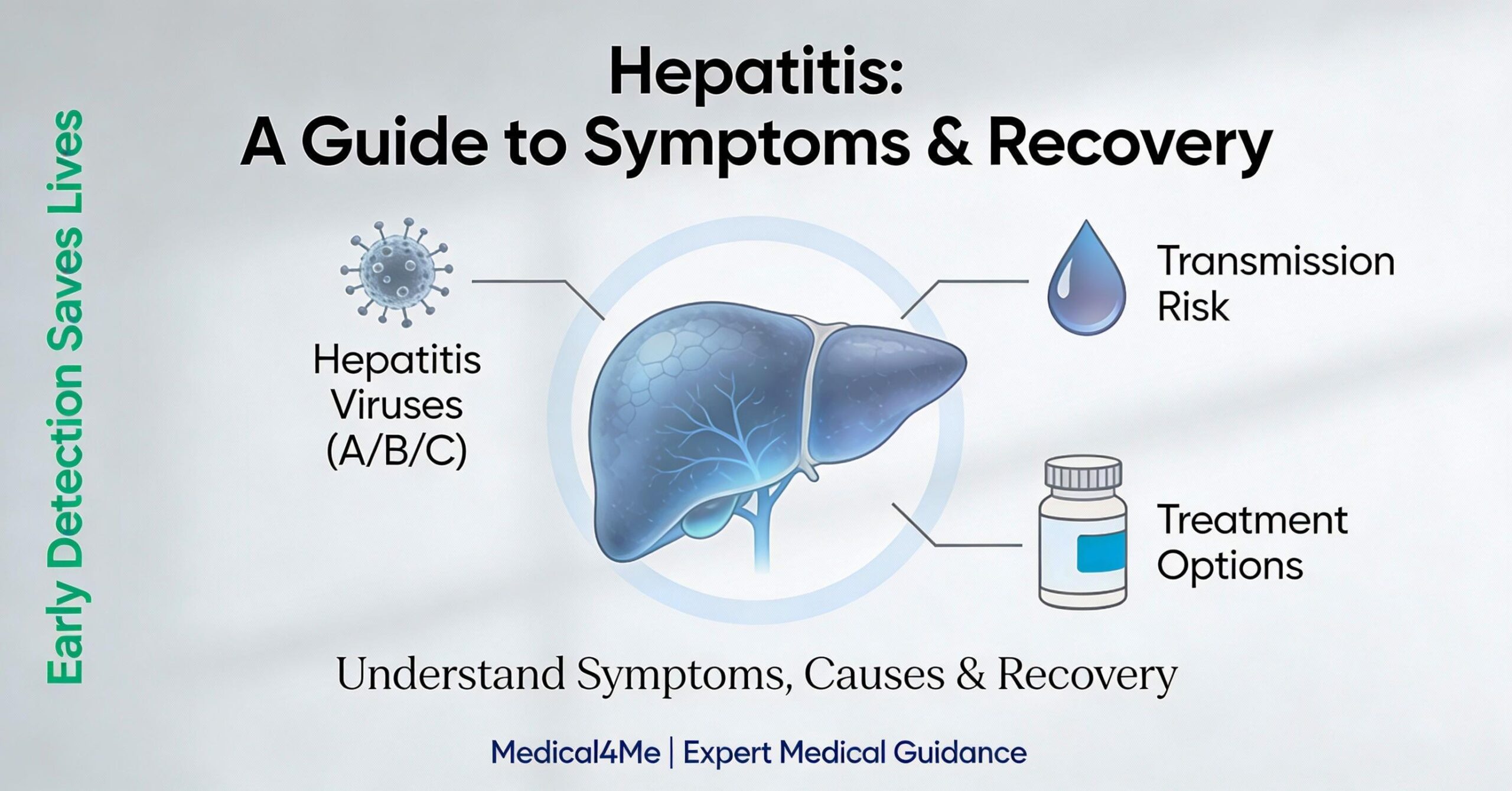
Hepatitis: A Guide to Symptoms & Recovery
You know, there’s a saying we used to whisper in the hospital wards during my residency: “The heart screams, but the liver suffers in silence.” It’s true. When your heart is in trouble, you feel it immediately. But your liver? It’s the stoic workhorse of your body, often taking hit after hit without a single complaint until the damage is already done.
That silence is exactly why Hepatitis can be so terrifying. You might be sitting there right now, scrolling through this on your phone because you’ve been feeling just a little “off”—maybe deeper fatigue than usual, or perhaps your skin looks a shade different in the bathroom mirror—and you’re scared. I get it. The internet is full of horror stories, and it’s hard to separate fact from fiction when you’re anxious.
I want you to take a breath. Seriously, just pause for a second. We are going to walk through this together, step by step. I’m going to explain this to you just like I explained it to my old friend Amir, who called me last month in a complete panic. We’ll strip away the confusing medical jargon and look at what is actually happening inside you.
What Hepatitis Actually Is
Let’s start with the basics. The word “Hepatitis” sounds complex, but it’s actually just Greek. “Hepa” means liver, and “itis” means inflammation. So, literally, it just means your liver is swollen and irritated.
The Chemical Factory Analogy
I want you to imagine your liver as a massive, high-tech Chemical Processing Plant. It operates 24/7. Every single thing you eat, drink, or even breathe goes through this factory. It filters out toxins (like alcohol or medication), produces fuel (energy for your day), and manufactures essential proteins that help your blood clot.
Now, imagine a group of vandals breaks into this factory and starts setting fires. That is Hepatitis. The workers (your liver cells) stop working because they are trying to put out the fire. Trash starts piling up because the filters are clogged. The entire production line halts. The “vandals” are usually viruses, but sometimes alcohol, drugs, or even your own immune system can strike the match.
When this inflammation happens, your liver swells. Because the liver is tucked safely inside your rib cage on the right side, you might feel a dull, aching heaviness there. It’s not always a sharp pain; it’s often just an uncomfortable pressure, like you ate too much, but it doesn’t go away.
Recognizing Symptoms and Signs
Because the liver is so resilient—it can actually regenerate itself!—it often doesn’t complain until the damage is significant. However, there are subtle flags if you know where to look. I call this the “Traffic Light System” of symptoms.
- 🟢 Mild (Early Signs): This is the tricky phase. You might just feel like you have the flu. Extreme fatigue is the biggest clue—feeling like you’ve run a marathon when you just woke up. You might have mild nausea, low-grade fever, or achy joints. Most people ignore this phase.
- 🟡 Moderate (Warning Zone): Now the liver is struggling. You might lose your appetite completely. Even the smell of your favorite food makes you feel sick. You might notice your urine becoming dark, looking like strong tea or cola, and your stools becoming pale or clay-colored.
- 🔴 Severe (Red Alert): This is when you see Jaundice. It’s the yellowing of the skin and the whites of the eyes. This happens because bilirubin (a yellow waste product) is building up in your blood because the liver can’t filter it out. You might also have intense abdominal pain and swelling in your legs or belly (ascites).
And here is the tricky part: many people, especially with Hepatitis C, have no symptoms at all for years. This is why regular check-ups are vital, something I emphasize in recent posts.
Understanding Causes and Risk Factors
We often hear about “Hepatitis” as one thing, but it’s actually a family of diseases. We call it the “ABC” of viral hepatitis, but let’s break down the actual risks. CDC guidelines state that viral infections are the leading cause, but they aren’t the only ones.
- Hepatitis A (The Traveler’s Virus): This is usually caused by eating contaminated food or drinking dirty water. It’s acute, meaning it hits fast—often causing violent illness—but the good news is, it usually leaves without permanent damage. Your body fights it off, and you’re immune for life.
- Hepatitis B (The Silent Persister): This is transmitted through blood, sexual contact, or from mother to child during birth. It’s tricky because for some adults, it clears up, but for others, it becomes a lifelong chronic condition that needs management.
- Hepatitis C (The Shapeshifter): This primarily spreads through blood-to-blood contact (like sharing needles or unsafe medical procedures). It’s often called the “silent killer” because it can hide in your system for decades, slowly damaging the liver without you feeling a thing until it’s very advanced.
- Alcoholic Hepatitis: This isn’t a virus. This is caused by heavy drinking over years. Alcohol is toxic to liver cells, and over time, it literally scars the liver tissue, leading to cirrhosis.
- Autoimmune Hepatitis: This is a case where your body’s own defense system gets confused and starts attacking the liver cells as if they were enemies. It’s rare, but serious.
The Diagnostic Journey
If you walked into my clinic today worried about Hepatitis, here is exactly what would happen. I wouldn’t just guess; we would follow a map. I want you to know this so you don’t feel anxious if your doctor orders these tests.
First, I’d ask about your history. Have you traveled recently? Do you have any tattoos? Did you ever have a blood transfusion before 1992? Then, we do a simple blood test called a “Liver Panel.”
We are looking for elevated liver enzymes—specifically AST and ALT. Think of these enzymes like employees inside the liver factory. If the factory walls are damaged, these employees leak out into the bloodstream. So, high levels in your blood mean the liver cells are breaking open.
If those numbers are high, we test for the specific viruses (Viral Load). Sometimes, we might need an ultrasound or a specialized scan called a FibroScan, which bounces sound waves off your liver to see how stiff it is. It’s painless, takes five minutes, and gives us clear answers.
Treatment Options Comparison
This is where I offer you real hope. Medicine has advanced incredibly in the last ten years. Hepatitis C, which used to be a terrifying diagnosis, is now curable for most people. WHO data shows extremely high success rates with modern therapies.
| Type | Typical Treatment | Duration | Curable? |
|---|---|---|---|
| Hepatitis A | Rest, hydration, nutrition | Weeks | Yes (Self-limiting) |
| Hepatitis B | Antivirals (Entecavir/Tenofovir) | Long-term | Managed (Not Cured) |
| Hepatitis C | Direct Acting Antivirals (Sofosbuvir) | 8-12 Weeks | Yes (95% Cure Rate) |
| Autoimmune | Steroids/Immune suppressants | Long-term | Managed |
For my patients with Hepatitis B, taking a daily pill is just like taking a vitamin for blood pressure. It keeps the virus asleep so they can live normal, active lives without fear.

Amir’s “Flu”
A Taxi Driver’s Wake-Up Call
I want to tell you about Amir, a 45-year-old cab driver. He came to see me because he thought he had a stubborn flu that just wouldn’t quit. “Doctor, I just can’t keep my eyes open after 2 PM,” he told me, looking exhausted. He was drinking five coffees a day just to stay safe on the road, but the fatigue was bone-deep.
Amir didn’t have the flu. His blood work showed active Hepatitis B, likely something he carried from birth without knowing. He was absolutely terrified. He thought he would lose his license, his livelihood, and be unable to support his kids. But we sat down, took a deep breath, and started him on antiviral medication that same week. Six months later? Amir is back to driving (though I told him to cut back on the double shifts!), and his energy is back. He manages it, just like other chronic conditions we treat daily. He is living proof that life goes on.
Prevention Strategies
Prevention is always, always cheaper than the cure. And honestly, it’s easier too. Here is my practical checklist for you to keep your liver safe:
- Get Vaccinated: There are highly effective vaccines for Hepatitis A and B. Please, get them. They are safe and save lives.
- Watch What You Eat: If you are traveling to areas with poor sanitation, stick to bottled water and cooked foods. Peel it, boil it, cook it, or forget it.
- Safety First: Never share razors, toothbrushes, or needles. If you get a tattoo or piercing, make sure the parlor uses a fresh, sealed needle and you see them open it.
- Moderate Alcohol: Give your liver a break. It heals remarkably well if you stop damaging it. Even a few alcohol-free days a week can make a huge difference.
When to Seek Medical Help
I want to be clear: most liver issues build up slowly, but there are times you need to act fast. You need to go to the ER or call your doctor immediately if you notice:
- Sudden confusion, drowsiness, or slurred speech (this is serious).
- Vomiting blood or material that looks like coffee grounds.
- Black, tarry, sticky stools.
- Severe abdominal swelling that happens quickly.
These are signs the “factory” is shutting down critical operations, and you need immediate support.
Frequently Asked Questions
Yes, amazingly, modern medicine has made huge leaps. With newer direct-acting antiviral (DAA) medications, we can now cure over 95% of Hepatitis C cases within 8 to 12 weeks. It is no longer a life sentence.
Generally, no. Viral hepatitis (A, B, C) is not genetic; it is transmitted via blood or fluids. However, autoimmune hepatitis can have a genetic component where your immune system mistakenly attacks the liver.
Absolutely. Many of my patients manage chronic Hepatitis B with daily antiviral medication. It suppresses the virus so you can live a long, healthy life without passing it on to your loved ones.
Dark urine is a classic sign that your liver is struggling to process bilirubin. If your pee looks like strong tea or cola, you need to see a doctor immediately as this indicates liver stress.
I highly recommend it. Hepatitis A and B vaccines are essential if you are traveling to areas with limited sanitation. It’s a simple shot that saves you from a lifetime of worry and potential illness.
My Final Professional Advice
Here is the truth: Your liver is forgiving, but it is not invincible. Dealing with Hepatitis can feel overwhelming, especially with the stigma sometimes attached to it. But remember Amir? Remember that medical science is on your side.
Don’t wait for the symptoms to scream at you. If you are unsure, get tested. It’s a simple blood draw. Take care of your body’s silent engine, and it will take care of you for a lifetime. You’ve got this, and we are here at Medical4Me to help you every step of the way.

Medically Reviewed By
Dr. Saqlain Mushtaq, MBBSLead Medical Author, Medical4Me.comAbout Our Editorial Process
💬 Share Your Experience
Share your thoughts, questions, or personal tips below. Our community and editorial team value respectful and insightful discussions.