Headaches: A Guide to Relief
As a doctor, I’ve sat knee-to-knee with hundreds of patients in your exact position. There is nothing—and I mean nothing—more exhausting than pain you can’t see but can’t escape. But here is the good news: most of the time, headaches are your body’s loud, annoying way of asking for help, not a sign of catastrophe.
What Headaches Really Are
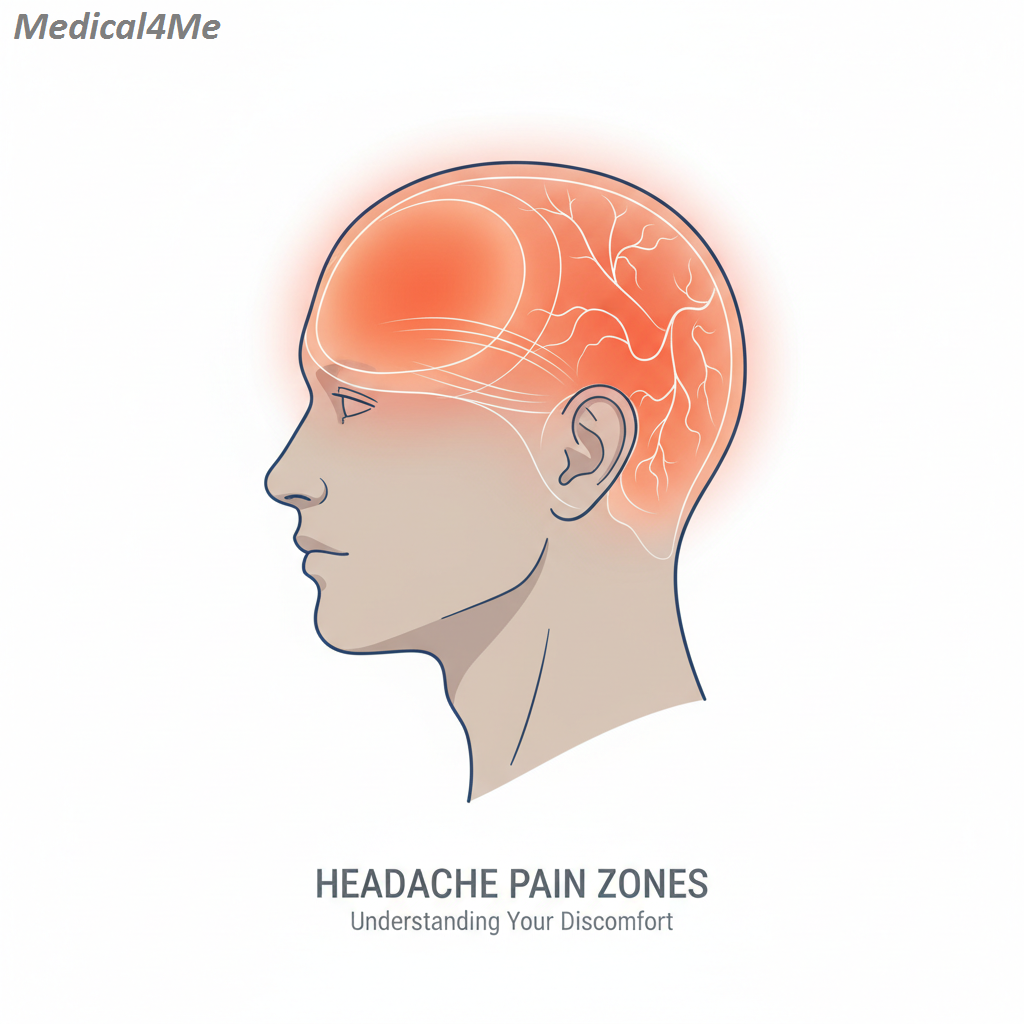
To understand what’s happening, we need to clear up a massive misconception. Your brain itself actually cannot feel pain. It doesn’t have pain receptors. So, when your head is pounding, it’s not your brain hurting; it’s the network of nerves, blood vessels, and muscles surrounding your brain that are screaming.
Think of your head like a high-security office building.
The boss (your brain) is sitting in the inner office, safe and sound. But the security guards outside (your nerves and blood vessels) are hyper-sensitive. When something goes wrong—maybe dehydration, stress, or a drop in blood sugar—it’s like someone tripped a silent alarm. The security guards start blowing whistles and flashing lights. The boss inside is trying to work, but the noise from the guards is unbearable.
That is your headache. It’s a reaction to a threat, not the threat itself.
I remember a patient I saw last year, let’s call him Hamid. He was a 52-year-old architect. He came in looking absolutely defeated.
“Dr. Mushtaq,” he said, rubbing his temples, “I’m convinced I have a tumor. It feels like someone is wrapping a rubber band around my skull and tightening it every day at 3 PM.”
Hamid didn’t have a tumor. He had classic tension headaches caused by hunching over blueprints for six hours straight without water. But the pain was real, and the fear was real. Once we addressed the “security guards” (his neck muscles and hydration), the alarm finally turned off.
Recognizing the Symptoms
Because there are over 150 types of headaches, figuring out which one you have is half the battle. You don’t need to memorize a textbook, but you do need to spot the patterns.
Here are the most common signals I look for:
- The “Tight Band” (Tension Headache): This feels like a dull, aching pressure around your forehead or the back of your head and neck. It’s annoying, but usually, you can still function.
- The “One-Sided Throb” (Migraine): This is the beast. It usually hits one side of the head, pulses or throbs, and often comes with nausea or sensitivity to light and sound.
- The “Ice Pick” (Cluster Headache): This is intense, burning, or piercing pain behind or around one eye. It hits fast and hard.
- The “Whole Head Pressure” (Sinus): You’ll feel this in your cheekbones, forehead, and bridge of your nose, usually getting worse when you bend forward.
My first thought when a patient describes their pain is always this: Are they moving around, or are they frozen still?
If a patient, like Hamid, is pacing around the room rubbing his neck, it’s likely tension. But if they are lying perfectly still because every movement makes it worse, my mind immediately goes to migraine.
Root Causes
So, why is this happening to you?
To be perfectly honest, the medical community is still exploring the precise mechanism of why some brains are so much more sensitive than others. We know what triggers it, but the exact why remains a bit of a mystery in some cases.
However, we know the usual suspects.
I met Amna, a 29-year-old graphic designer, a few months back. She was brilliant, creative, and completely miserable. She was getting debilitating migraines every weekend. We call these “let-down headaches.” She ran on high adrenaline Monday through Friday, stressing over deadlines. Then, on Saturday morning, when her stress hormones dropped, her blood vessels dilated rapidly, triggering a massive migraine.
Her trigger wasn’t just stress; it was the change in stress levels.
Other root causes include:
- Dehydration: The most common and easiest to fix.
- Eye Strain: Staring at screens without blinking enough (hello, computer vision syndrome).
- Sleep Disruption: Too much sleep is sometimes just as bad as too little.
- Dietary Triggers: Aged cheeses, processed meats (nitrates), and alcohol.
The Diagnostic Journey
If you come to see me, or any doctor, about chronic headaches, don’t expect us to wheel you into an MRI machine immediately. In fact, imaging is rarely necessary for typical cases.
Here is what the process actually looks like:
- The History Taking: I’m going to ask you weird questions. Do you drink coffee? When do you pee? Do your parents get headaches? This is where 90% of the diagnosis happens.
- The Physical Exam: I’ll check your vision, your reflexes, and your blood pressure. I’ll palpate (touch) your neck and shoulders to look for muscle knots.
- The Headache Diary: I might ask you to keep a log for two weeks. When did it start? What did you eat? This helps us spot triggers you might miss.
- Neurological Check: I’ll have you push against my hands, walk in a straight line, and squeeze my fingers. I’m checking to make sure your brain’s “wiring” is working perfectly.
We usually only order scans if your exam shows something abnormal or if the headache pattern changes drastically. This is standard practice, as the Mayo Clinic explains, to avoid unnecessary radiation and cost.
Treatment Reality
Okay, let’s get to the part you actually care about: making it stop.
Lifestyle First
Before we talk pills, we have to talk about your environment. You can take all the medicine in the world, but if you’re dehydrated and staring at a screen for 10 hours, the headache will come back.
I tell my patients to use the “20-20-20 rule” for eyes: Every 20 minutes, look at something 20 feet away for 20 seconds. It breaks the spasm in your eye muscles. Also, hydrate like it’s your job.
Medical Options
Sometimes, water and rest aren’t enough. That is okay. There is no shame in needing medication.
Let’s look at a couple of common options I prescribe or recommend.
1. Ibuprofen (Advil/Motrin): This is an NSAID (Non-Steroidal Anti-Inflammatory Drug). It works by blocking the production of prostaglandins, which are chemicals your body releases that cause inflammation and pain signals. It’s great for tension headaches. Common Side Effects: Stomach upset, heartburn. Always take it with food.
2. Sumatriptan (Imitrex): This is a prescription-only medication specifically for migraines. It belongs to a class called “triptans.” It works by stimulating serotonin receptors in the brain, which causes the swollen blood vessels to narrow (constrict) and return to normal. Common Side Effects: Drowsiness, a feeling of tightness in the chest or throat (which can be scary but is usually harmless), and flushing.
3. Verapamil: This is actually a blood pressure medicine (calcium channel blocker), but we use it off-label as a preventative for Cluster Headaches.
I had a patient, Marcus, a 41-year-old truck driver. He suffered from cluster headaches—the kind that feel like a hot poker in the eye. Over-the-counter meds didn’t touch his pain. We put him on Verapamil to prevent the attacks and gave him high-flow oxygen to use when an attack started. It changed his life. He went from fearing every shift to driving confidently again.
Here is a quick breakdown to help you weigh your options:
| Feature | OTC Meds (Ibuprofen/Excedrin) | Prescription Triptans (Sumatriptan) |
|---|---|---|
| Best For | Tension headaches, mild migraines | Moderate to severe migraines |
| Speed | Takes 30-60 minutes | Fast-acting (especially injections/sprays) |
| Availability | Available everywhere | Doctor’s prescription needed |
| Risk | Rebound headaches if used too often | Not safe for people with heart conditions |
| Cost | Very affordable | Can be expensive depending on insurance |

Red Flags
I want to be warm, but I also need to be responsible. Most headaches are benign, just like with other conditions we discuss, but there are signs you should never ignore.
Please seek immediate help if you experience:
- The “Thunderclap”: A headache that goes from zero to maximum pain in seconds.
- Fever and Stiff Neck: If you can’t touch your chin to your chest, this could be meningitis.
- neurological changes: Slurred speech, confusion, numbness in an arm or leg, or vision loss.
- Post-Injury: A headache that starts after you’ve hit your head.
WHO data shows that headache disorders are among the most common disorders of the nervous system, but these specific red flags are rare. Still, it is better to be safe.
Frequently Asked Questions My Patients Ask
It’s a double-edged sword. Caffeine can actually help stop a headache early on (it’s in many migraine meds), but if you drink it daily and stop, you’ll get a withdrawal headache.
This is often due to sleep apnea (stopping breathing while you sleep) or grinding your teeth (bruxism) due to stress.
Absolutely. Many women experience “menstrual migraines” due to the drop in estrogen right before their period starts.
If you take painkillers more than 2-3 times a week, your body gets used to them. When the meds wear off, the pain comes back even worse. It’s a vicious cycle.
For tension (neck tightness), use heat to loosen muscles. For migraines (throbbing), use ice packs to numb the area and constrict blood vessels.
My Final Professional Advice
If I could leave you with one thing, it’s this: You do not have to “tough it out.”
I’ve seen too many people, especially men like Hamid or busy professionals like Amna, try to push through the pain because they think they’re just being weak. You aren’t. Pain is real, and it depletes your energy.
Start a simple diary. Drink an extra glass of water today. And if the pain persists, go see a doctor. We aren’t scary, and we really do want to help turn off that alarm system so you can get back to living your life.
I’ve written more about managing daily health here at Medical4Me, and I mentioned in recent posts how small lifestyle tweaks can save you a trip to the ER.
Rest your eyes. You’ve got this.
Dr. Saqlain.

Medically Reviewed By
Dr. Saqlain Mushtaq, MBBS Lead Medical Author, Medical4Me.com About Our Editorial Process
💬 Share Your Experience
Share your thoughts, questions, or personal tips below. Our community and editorial team value respectful and insightful discussions.