
Chickenpox on Body: A Doctor’s Honest Guide to the Itch
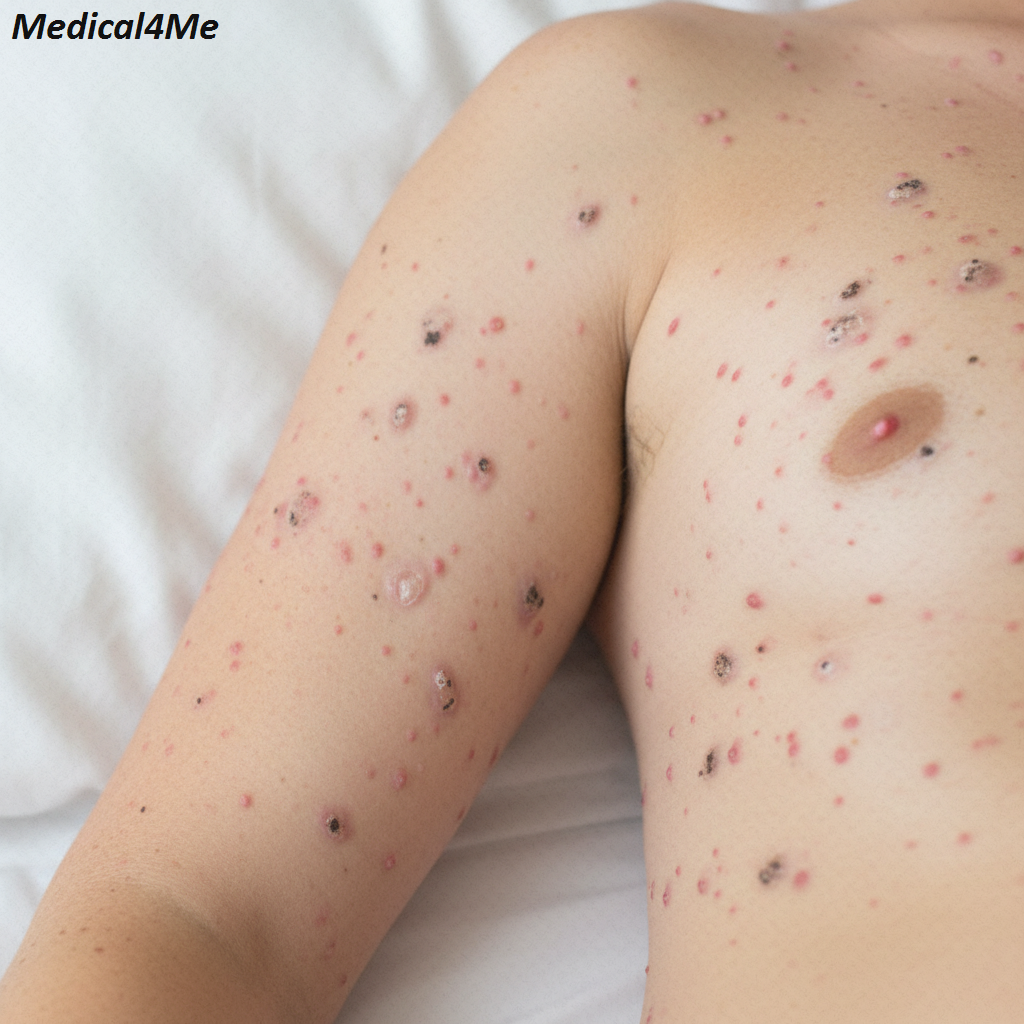
We are going to talk about that itchy, blistering rash—the chickenpox on body parts you didn’t even know could get a rash—and how we are going to get through it together.In my childhood I have to face this skin disease twice. My Parents thought It is a disease which every person have to face once in a life, but they were wrong as when they see Chickenpox on my body second time in their life. So let see it medically:
What Chickenpox Really Is
Let me give you a simple way to visualize this virus. Imagine your body is a well-secured house. The Varicella-zoster virus (that’s the medical name for chickenpox) is like an uninvited houseguest who shows up to your party, eats all the food, makes a huge mess in the living room, and causes absolute chaos for about a week.
But here is the kicker: once the party is over and the mess (the rash) is cleaned up, this guest doesn’t actually leave. He just goes down to the basement (your nerve roots) and falls asleep. He might sleep there for fifty years. Sometimes, he wakes up later in life as Shingles, but for now, he’s just causing that initial chaotic party we call Chickenpox.
It’s highly contagious. To be perfectly honest, the medical community is still exploring why some people have such mild reactions—maybe five or ten spots—while others are covered from head to toe. It’s baffling, and I know it’s frustrating when you are the one suffering.
Recognizing the Symptoms
It usually doesn’t start with the spots. Before you ever see the chickenpox on body or face, you usually feel like you’ve been hit by a truck.
I remember treating Amna, a 34-year-old graphic designer from Chicago. She came in convinced she had the flu. “Dr. Saqlain,” she told me, “I can barely lift my head off the pillow.” She had a fever, she was aching, and she had zero appetite. Two days later, she called me back. “The spots are here,” she said.
For Amna, because she was an adult, the symptoms were intense. But whether you are 7 or 37, the pattern is usually the same.
The Warning Signs (Before the Rash)
- Fever: Usually mild in kids (100–102°F) but can be higher in adults.
- Fatigue: A deep, heavy tiredness.
- Loss of Appetite: Nothing tastes good.
- Headache: A persistent thumping.
The Rash Timeline (The “Crops”)
This is the hallmark. The rash often appears in “crops” over several days, meaning you might see all three stages of the spots at the same time on different parts of the body.
- Stage 1: The Papules. These are pink or red raised bumps. They look like bug bites or pimples.
- Stage 2: The Vesicles. Within about 24 hours, those bumps fill with fluid. They become small blisters. We call them “dewdrops on a rose petal” because they are clear fluid on a red base. This is when they itch the most.
- Stage 3: The Crusts. The blisters break and leak (I know, it’s gross), and then they crust over into scabs.
Warning Signs: You might find chickenpox on body areas that are sensitive—inside the mouth, on the eyelids, or the genital area. This is normal, but it can be very painful.
Some Causes of ChickenPox is following below:
So, how did this happen? It’s not because of poor hygiene or anything you did wrong. The Varicella-zoster virus is incredibly efficient. It spreads through the air when an infected person coughs or sneezes, or through direct contact with the fluid from the blisters.
I recently saw Mr. Latif, a 55-year-old taxi driver. He hadn’t had chickenpox as a kid. He picked up a passenger who was coughing, and that passenger happened to have the virus. Because Mr. Latif’s immune system hadn’t seen this “houseguest” before, it didn’t know how to lock the door.
Adults like Mr. Latif often get hit much harder than kids because their mature immune systems launch a massive, full-scale war against the virus, which causes more inflammation and tissue damage than a child’s gentler immune response.
According to CDC guidelines, the virus is contagious from 1 to 2 days before the rash appears until all the blisters have crusted over.
The Diagnostic Journey
My first thought when a patient describes this is always: Is it really chickenpox, or is it Hand, Foot, and Mouth disease? They can look similar. However, the distribution of the spots usually gives it away.
Here is what happens when you come to see me or visit us here at Medical4Me:
- The History: I will ask about exposure. Have you been around anyone sick in the last 2 weeks?
- The Visual Exam: I look for that “dewdrop on a rose petal” appearance. I also check for the “crops”—seeing new bumps next to old scabs is a dead giveaway.
- Lab Tests (Rarely Needed): In complicated cases, or if a pregnant woman is exposed, we might swipe a blister for a PCR test to confirm the DNA of the virus.
I remember Zain, a lively 7-year-old boy. His mom brought him in because he had a fever and a few spots on his tummy. By the time I finished listening to his lungs, I saw two new spots appear on his neck. That speed is characteristic of Varicella.
Treatment:
Let’s be real: for most children, treatment is just about surviving the itch. But for adults or those with weak immune systems, we need to be more aggressive.
There is no “cure” that wipes it out instantly, but we can make it shorter and less miserable.
Lifestyle and Home Remedies
The goal here is to stop the itch so you don’t scar.
- Oatmeal Baths: Use colloidal oatmeal (finely ground oats). It soothes the inflammation.
- Cool Compresses: Heat makes the itch worse. Keep the skin cool.
- Short Fingernails: Cut them short. If you scratch a blister and introduce bacteria, you get a secondary skin infection.
Medical Options
If you visit a clinic, we might prescribe specific medications. It is vital to know what these are and why we use them.
1. Acetaminophen (Tylenol/Panadol):This is for the fever and pain.
- Mechanism: It works centrally in the brain to block pain signals and cool down the body’s thermostat.
- Side Effects: Generally safe, but liver damage can occur if you take too much.
- WARNING: NEVER give Aspirin to a child or teenager with chickenpox. It can cause Reye’s syndrome, a deadly condition affecting the liver and brain.
2. Diphenhydramine (Benadryl):This is an antihistamine to help you sleep through the itch.
- Mechanism: It blocks histamine, the chemical your body releases that makes you feel itchy.
- Side Effects: Drowsiness, dry mouth, dizziness.
3. Acyclovir (Zovirax):This is an antiviral medication. We don’t give this to healthy kids usually, but for adults like Amna or Mr. Latif, it is crucial.
- Mechanism: It tricks the virus. It looks like a building block the virus needs to copy its DNA, but when the virus uses it, the copying stops. It halts the replication.
- Side Effects: Nausea, diarrhea, headache. It works best if started within 24 hours of the rash.

Comparing Your Options
| Treatment Approach | Pros | Cons |
|---|---|---|
| Supportive Care (Home) | No side effects, inexpensive, soothing. | Doesn’t shorten the illness, only manages comfort. |
| Antiviral Drugs (Acyclovir) | Can shorten duration by 1-2 days, reduces severity. | Must be started immediately (within 24 hours), potential side effects. |
| Antihistamines | Helps with sleep and reduces scratching. | Can make you very drowsy; doesn’t treat the virus itself. |
Warning Signs
Most of the time, this resolves on its own. However, complications can happen. Mayo Clinic experts warn that you should call me immediately if:
- The rash spreads to the eyes. This can damage vision.
- The fever spikes high. A fever over 102°F (38.9°C) that lasts more than 4 days is worrisome.
- Breathing gets hard. If the virus moves to the lungs, it causes Varicella pneumonia. This is serious.
- The skin gets red and warm. If the area around a blister becomes bright red, hot, and painful, it might be infected with bacteria (like Staph).
Frequently Asked Questions My Patients Ask
It is extremely rare. Once you have had it, your body remembers the enemy. However, WHO data shows that people with weakened immune systems can sometimes get it again.
You are contagious until every single blister has scabbed over. This usually takes about 5 to 7 days after the chickenpox on body spots first appear.
Please don’t. While usually mild, chickenpox can lead to severe pneumonia or brain inflammation. The vaccine is a much safer way to get immunity.
Calamine lotion is classic and works well. Avoid heavy, perfumed lotions as they can irritate the raw skin.
The Varicella vaccine is 98% effective. I mentioned in recent posts how vaccines protect not just you, but the vulnerable people around you.
Call your doctor immediately. Chickenpox can be dangerous for both you and the baby. We can give you a special injection (immunoglobulin) to try and prevent the infection.

Medically Reviewed By
Dr. Saqlain Mushtaq, MBBSLead Medical Author, Medical4Me.comAbout Our Editorial Process
💬 Share Your Experience
Share your thoughts, questions, or personal tips below. Our community and editorial team value respectful and insightful discussions.