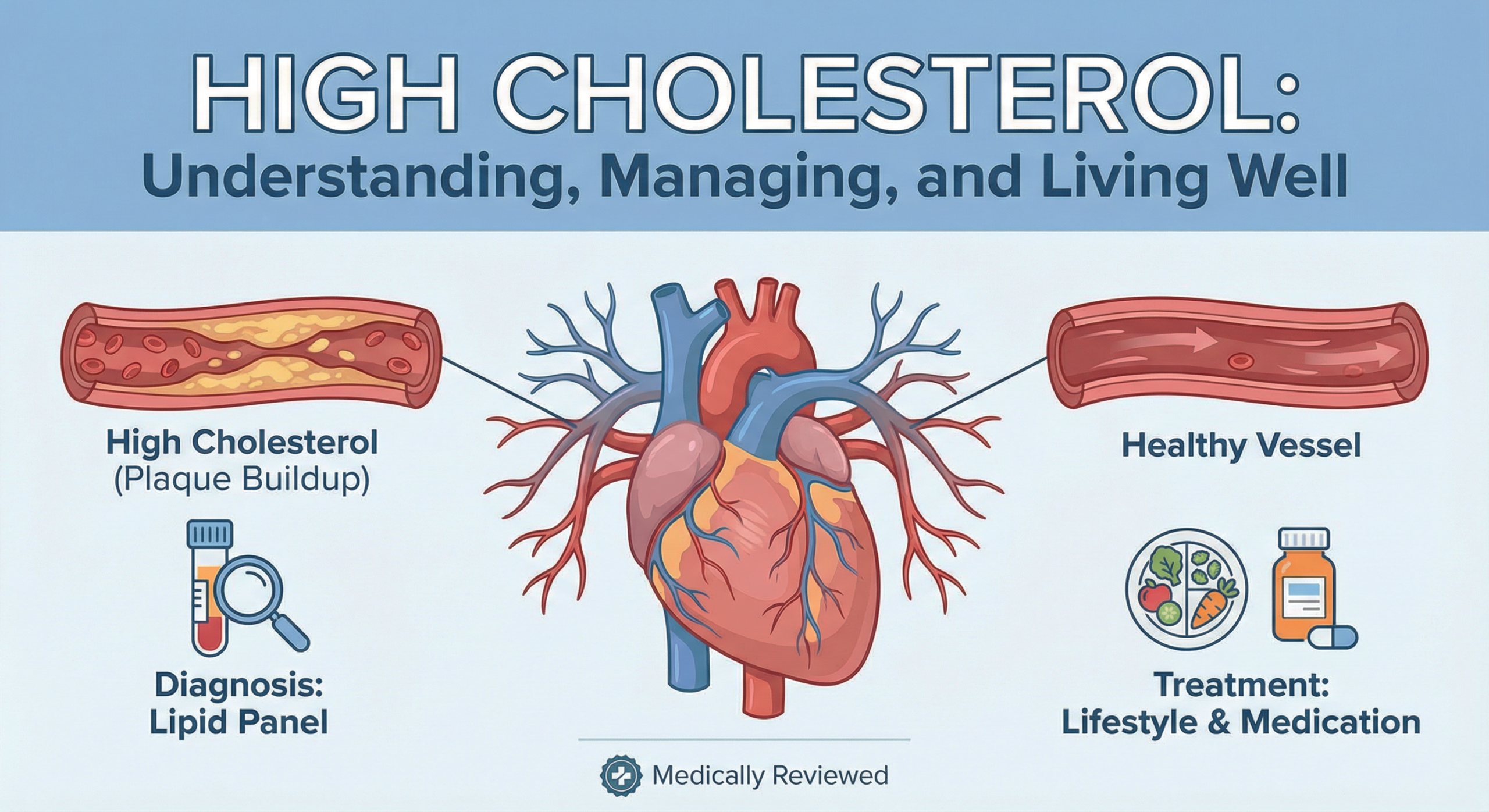
Because of this diagnosis, you may feel like your body “broke” on you. Sure, the worst case situations come to your mind. Heart attacks. Strokes. Dumbfound medical terms about which you don’t really have a clue. Therefore, the goal tonight is to remove all of the horrifying medical jargon. I want to tell you the dead straight truth of what is going on inside your blood vessels.
Once we have this map of your highway system then we could plan out where to fix it exactly.
What is High Cholesterol?
My first thought when I hear any patient describe the fear of this diagnosis is always the same, we have totally failed at explaining what cholesterol actually is.
Cholesterol isn’t poison. In fact it is a soft wax material which your liver secretes. Your body has a fundamental need to be able to build its healthy cells, produce healthy hormones, and digest food. Are World Trade Drugs You would not surviv However the problem comes with the way this wax gets transported around your body.
Let’s use a simple picture. suppose your blood were a great highway system. since cholesterol is not soluble in blood – it is waxy and fat-like – this means that cholesterol cannot dissolve in blood. Consequently, your liver transports the cholesterol to the home in small delivery trucks referred to as lipoproteins.
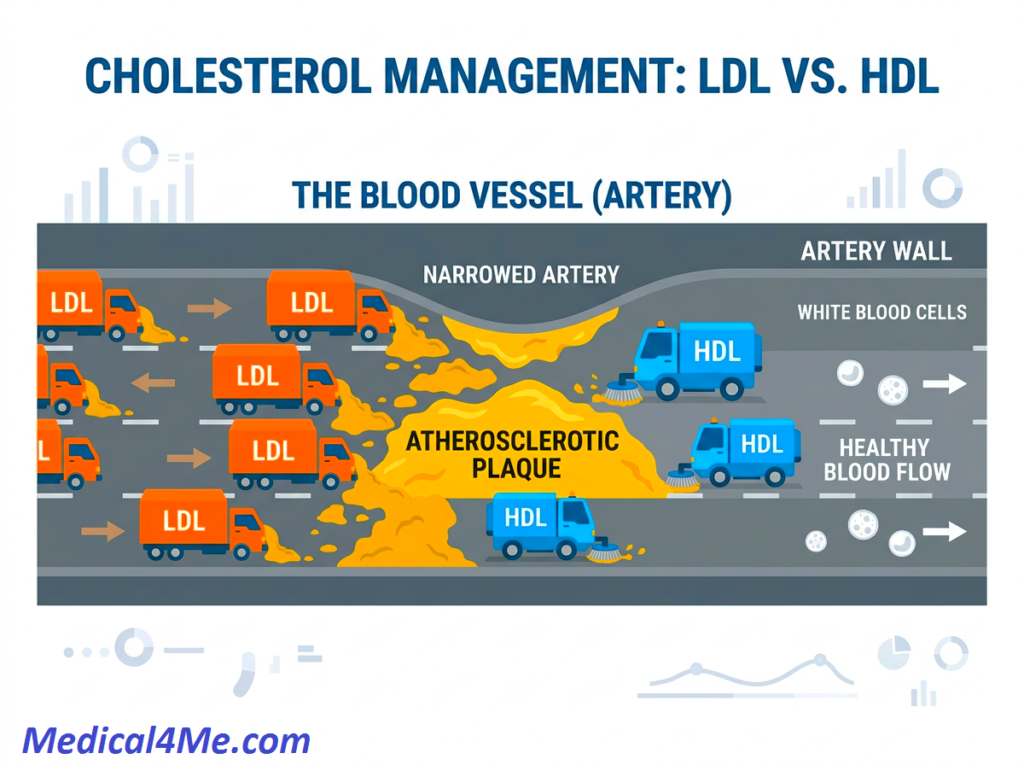
There are two major categories of delivery trucks on your highway.
First we have the LDL’s or Low Density Lipoproteins trucks. Imagine that they are the routine delivery drivers. Their job is to delivery material of the construction to your cells. But in the case of people with High Cholesterol, you have way too many of these trucks on the road. They get in accidents, spill their waxy cargo along the walls of the highway and create massive traffic jams. And we call these traffic jams “plaque.”
Second one is the HDL (High – Density – Lipoprotein) trucks. These are your street sweepin’ folks. They go around and pick up the spilled cargo and pull it back to the liver to be destroyed.
When your doctor says your numbers are bad, all he or she really means is you have too many delivery trucks dropping off the stuff, and not enough street sweepers cleaning it up. It isn’t a death sentence. It’s merely a traffic problem, one we have to fix. Just like with other conditions that we are seeing every single day, this is incredibly manageable.
Recognizing the Symptoms
Here is the most frustrating part about this condition. It’s entirely silent.
Tariq is a brilliant 45-year-old software engineer. He spends hours looking at lines of code and drinking saccharin-based energy drinks and eating whatever is closest to his keyboard. Tariq felt absolutely fine. He possessed endless energy, played weekend cricket and never had an ache in his body. Yet when he finally decided to have a routine blood examination for a life insurance policy, his numbers were dangerously high.
He didn’t think the results because he felt normal.
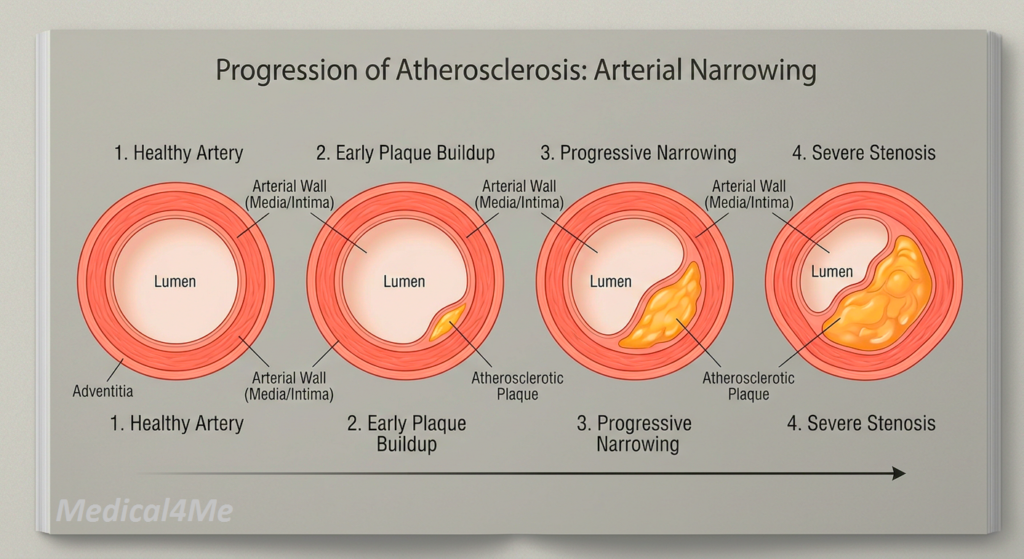
Most people don’t feel a thing. The plaque then cannot be seen developing silently for decades. Because of the roadways saturating, the highway lanes get narrower and narrower; your heart has to work much harder to pump the blood. Eventually, if the road gets completely blocked, then that tissue squeezes (starves).
While the condition itself is the cause of invisibility, there are the rare the physical clues if the buildup is severe or genetic. In case you observe any of them, you should call a doctor:
Xanthomas: Small, yellowish hues to your skin that is fatty nature (that becomes subcutaneous) and especially gives you Xanthomas around your eyes, elbows, or knees.
Corneal Arcus: That ring, light gray or white, which joins around that part of your eye which is colored (the iris).
Unexplained Chest Pain: This occurs when the blood vessels that are feeding your heart become very narrow – known as Angina.
Numbness in Extremities: Coldness or pangling feeling in his/her leg and feet due to poor circulation.
Extreme Fatigue: Becoming absolutely exhausted after a small physical activity due to the fact that the heart is overworking itself.
In the absence of these signs, do not think that you are clear. The only way of knowing for sure why is by having a look under the hood via a blood test.
Common triggering factors include:
Let’s speak about the reason of this happening. You may be destroying yourself right now with guilt for that extra piece of cake you ate last week. Stop that.
As much as diet is a contributing element, the entire picture extends a great deal. WHO data shows that risks of cardiovascular is a complex combination of genetics, lifestyle and environment.
Farah is a 62 year old retired teacher who is adjusting to her new life. She is incredibly health conscious. She eats oatmeal every morning, walks daily and hasn’t touched fried food in decades. Despite her perfect lifestyle, the numbers were incredibly high. Why? Because her liver produces cholesterol naturally more due to her genes. This is referred to as Familial Hypercholesterolemia.
Her body simply ignores her good habits and manufactures the excess delivery trucks anyway.
For others, the root cause is an environmental issue. Eating foods that are high in saturated fat (such as red meat and full-fat dairy products), or trans fat (found in many products sold in packaged foodstores) tell your liver to make more LDL trucks. Smoking actually damages your blood vessels so that they are sticky for the wax to catch up faster. Furthermore, no exercise is equivalent to not making enough HDL street sweepers.
It’s usually a combination. The gun (with your genes) is loaded and your lifestyle is what pulls the trigger.
The Diagnostic Journey
If you are asking yourself how on earth we can tell all this stuff, the process is amazingly simple. It’s called a lipid panel.
To be perfectly honest, the medical community is still trying to figure out exactly how this works when it comes to why some people’s bodies do respond so drastically different to the exact same diets. We don’t have all the answers. However, we do have incredibly accurate ways of measuring the damage.
The following is what you should expect when you incur a test:
The Fast: It will common data of requiring 9 to 12 hours fasting before blood draw. This means nothing but water. California Ob-Gyn, Dr. Karissa. had this to say on her website when explaining why she automatically tests her patient four hours post-test after eating a food trigger. “We do this to ensure the food you just ate doesn’t temporarily spike your numbers and give us a false reading.”
The Blood Draw: You get a small stabbing in your arm. It is less than five minutes in length.
Measuring Total Cholesterol This is the amount of all the cholesterol in your blood. For the most part we want this number to be below 200 mg/dL.
Analysis of the LDL: It is the bad one. We want this low. Ideally less than 100 mg/dL but in case of heart disease risks we could target less than 70.
Examining the HDL: The good stuff. We want this high! More than 60 mg/dL is said to be protective against heart disease.
Measuring Triglycerides This is another fat present in your blood. When you consume more calories than you burn, your body will turn them into triglycerides and store them in overweight cells as fat. We want this under 150 mg/dL.
Treatment :
This is where the fear is usually at its peak. You are probably utterly terrified thinking that you are going to have to eat rabbit food for the rest of your days or take a mountain of pills. Let’s try to put the fears into reality. Treatment is a joint enterprise between living and doing what modern medicine has to offer.
Lifestyle Changes:
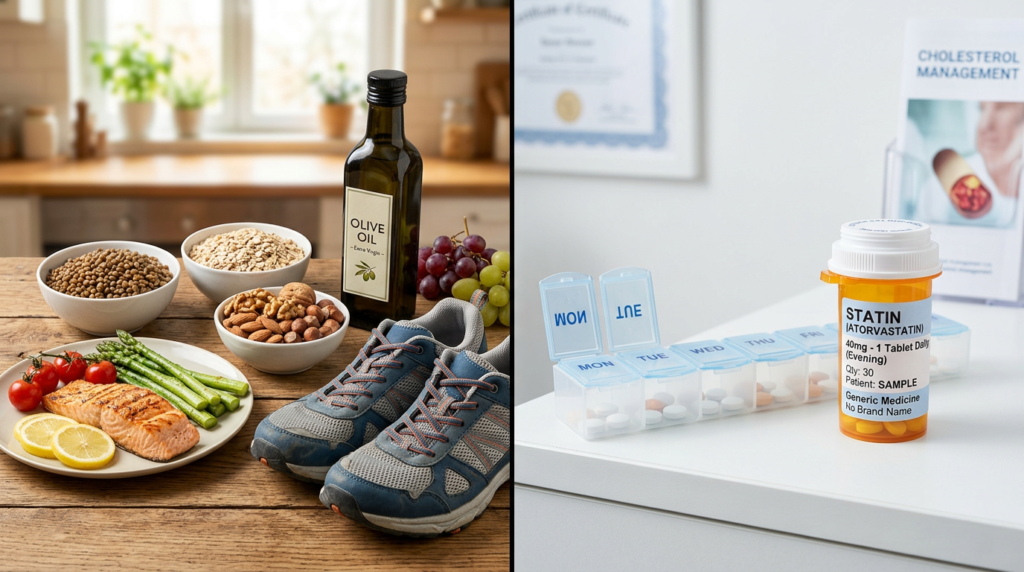
We always start here. This is your daily line of defence with egotistical habits.
You also do not need to starve yourself. Instead, you need to replace bad building materials with good ones. Substitute unsaturated fats with saturated fats. substitute these items with butter with olive oil. Consume greater amount of fish which contains omega-3 fats. Eat more soluble fiber, certain foods such as beans, lentils and oats are good sources of fiber since fiber actually attaches the cholesterol within your digestive system and pulls it right out of your body before it leaves through your bloodstream.
Motion is as well effective. You do not need to join the marathon runners. When you do such simple things as take a thirty-minute lesson stroll a day, the body is made to produce more of what they call the HDL street sweepers.
Medical Options
At times, lifestyles aren’t sufficient. When your genes are the wheels of the monorail we must have some medicine to tap the brakes.
Imran is a 38-year-old freelance photographer working on building his dream, but he tried to diet his way out of dangerous numbers for an entire year. He lost weight-but his lab results barelyBlogglar. He felt like a total failure. I had to sit him up and comment that his liver was just actually working against him. We have started him on a low dose of medication and within months his numbers were perfect. He got his peace of mind back.
Mayo Clinic explains that there are a bunch of classes of drugs that are incredibly effective. The following is the prescription that we mostly make:
Statins (i.e. Atorvastatin or Rosuvastatin):
These are the most common. They act by preventing the production of cholesterol in your liver through the action of a certain enzyme (HMG-CoA reductase) that your body requires. As your liver is producing less it literally drags existing cholesterol out of your blood to sustain its demands. It’s brilliant.
Typical effects Natural effects: pains or mild joint pains. It rarely offers interim hyperlipase.
Cholesterol Inhibitors of absorption (e.g. Ezetimibe):
Instead of working in the liver, this drug instead works in your small intestine. It works like a bouncer at a club driven by removing the cholesterol carried through food you are eating physically away from being absorbed into your blood.
ADverse effects: up toset or available mild diarrhoea.
Let’s look at how they compare:
FeatureStatins (Atorvastatin)Absorption Inhibitors (Ezetimibe)
How It WorksBlocks liver productionBlocks intestinal absorption
Effect in LDLLowers very significantlyLowers moderately
ProsProven to reduce heart attack riskGreat for those who can’t tolerate statins
ConsPotential for muscle achesLess powerful on its own
UsageOften the first line of defenseOften added to a statin later
Clinical Indicators of Serious Pathology:
While we’re on the subject of handling this long, you need to be aware of when a traffic jam has evolved into a complete roadblock. High Cholesterol doesn’t cause sudden symptoms, the complications it creates absolutely do.
If one of your arteries suffers a bursting plaque, a blood clot is formed immediately over this spot. With that blood clot keeping your heart alive, then that is a heart attack. When it intercepts blood flow to your brain it is a stroke.
You have to call for emergency services in conditions where you tend to feel a crushing pressure at the center of your chest. Should you be unable suddenly to articulate yourself, or one side of your face fall. When (You) have this rather sharp, pained down your left arm or up to your jaw.
Don’t wait to see if it passes. Time is muscle. Time is brain tissue. Act fast.
Common Questions
I know your head is spinning. As I’ve said in some of my recent posts some patients always ask the exact same questions. Let me answer them for you now then.
Most Common Enquiries Asked by my Patients.
Can I ever eat eggs again?
Yes, absolutely. The cholesterol in food (saturation fats; eggs) does not affect your figures so forcefully, as do saturated fats (bacon and the likes).
Will I be on statins forever?
Usually, yes. Since statins regulate the production of the liver, discontinuing the drug normally results in your contents simply skyrocketing up again.
Butter is not really bad, right?
In large amounts, yes. Saturated fat foods which Butter is rich in specifically instruct your liver to make more trucks of LDL.
Can stress raise my numbers?
Indirectly, yes. High stress releases cortisol, which can cause an increase in blood sugar and triglycerides, and stressed people don’t eat well.
Is my level of water consumption reduced by taking of water?
No. ‘Owing to the fact that cholesterol is fat based, water does not wash it off.’ However, hydration is beneficial to your general metabolism.
Are there any natural supplements which are effective?
Some find some success with Plant Stanols or Red Yeast Rice with only mild success. Nevertheless, these require your doctor consultation, because Red Yeast Rice does have in it natural statins, and have the potential to react with the medications.
Medically Reviewed By
Dr. Saqlain Mushtaq, MBBS
Lead Medical Author, Medical4Me.com
Medical Disclaimer: The information provided is for informational purposes only. Always seek advice from a qualified medical provider.
💬 Share Your Experience
Share your thoughts, questions, or personal tips below. Our community and editorial team value respectful and insightful discussions.